
Thought for the Day
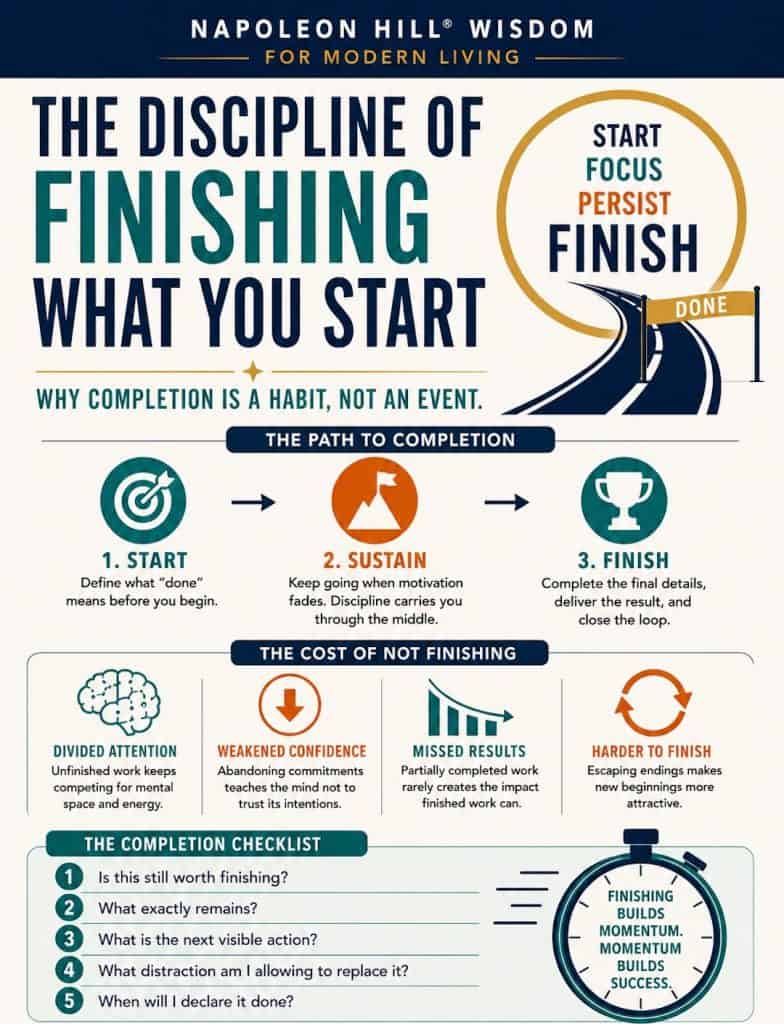
The Discipline of Finishing What You Start
Why Completion Is a Habit, Not an Event
Progress 100% — The final step teaches
the mind that effort leads somewhere.
Starting creates possibility. Finishing creates evidence.
The habit of completion is built every time you keep working after the excitement of beginning has disappeared.
Beginning is often the easiest part of achievement. A new idea carries energy. A fresh goal feels exciting. The possibilities are still untouched by inconvenience, repetition, delay, or difficulty.
Finishing is different. Completion usually arrives after novelty has faded. The remaining work may be less interesting. Problems appear. Another idea begins competing for attention. The mind starts suggesting that perhaps the unfinished project can be returned to later.
This is where completion becomes a discipline rather than a mood.
The Completion Principle
Every finished task strengthens the identity of a person who follows through.
Napoleon Hill and the Discipline of Follow-Through
Napoleon Hill® repeatedly emphasized persistence, self-discipline, definiteness of purpose, personal initiative, and controlled attention. Each principle becomes meaningful only when intention survives long enough to produce a result.
A definite purpose provides direction. Initiative begins the work. Persistence keeps effort moving. Self-discipline protects the effort when enthusiasm weakens. Controlled attention keeps competing distractions from repeatedly stealing the energy required to finish.
Completion is where these principles meet.
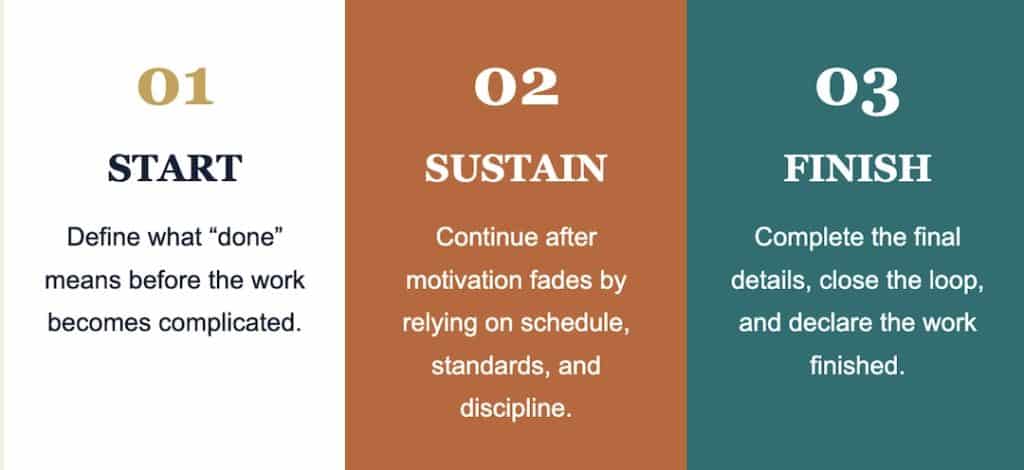
Start. Sustain. Finish.
Achievement requires more than the courage to begin.
The Modern Temptation to Keep Starting
Modern life offers an endless supply of new beginnings. New apps, ideas, projects, courses, goals, opportunities, and strategies arrive faster than most people can realistically pursue them.
Starting something new often produces an immediate emotional reward. Finishing usually requires returning to the same objective repeatedly, solving tedious problems, correcting mistakes, and continuing when little excitement remains.
Without discipline, novelty can become a form of avoidance. We keep replacing difficult endings with exciting beginnings.
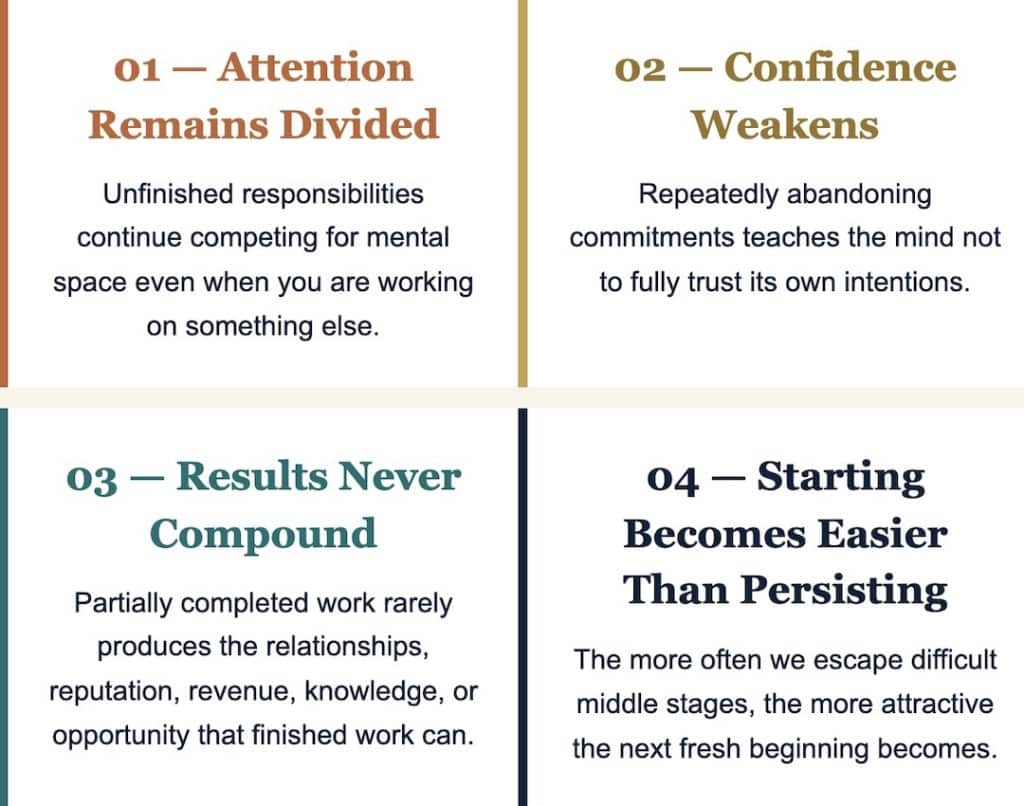
The Hidden Cost of Unfinished Work
Finishing Is Not the Same as
Refusing to Change Course
Discipline does not require completing every idea simply because it was once started. Accurate thinking may reveal that an objective is no longer worthwhile, a plan is flawed, or circumstances have changed.
There is a difference between abandoning a worthwhile goal because the work became uncomfortable and deliberately ending an effort because careful judgment shows that resources should be redirected.
Even a decision to stop should be completed properly: communicate the decision, capture the lesson, close obligations, and free the attention that the project was consuming.
The Completion Formula
Make finishing easier by reducing ambiguity.

Perfection Can Become
the Enemy of Completion
Some projects remain unfinished not because effort is lacking, but because the standard for completion keeps moving. One more revision becomes five. Another small improvement becomes an excuse to delay delivery. The person remains active, but the result never enters the world where it can be evaluated, used, improved, or appreciated. Excellence matters. But excellence must eventually become finished work.
Completion turns effort into evidence, intention into reputation, and practice into confidence.
Today’s Challenge
Finish One Thing
Before beginning another optional project today, choose one worthwhile unfinished responsibility and move it completely across the finish line.
Today, look at the unfinished work that continues occupying your attention. Choose one item that still matters. Do not wait for renewed excitement. Define what remains. Protect enough time to complete it. Resist the attraction of a new beginning until the important ending has received its due attention. Then finish.
The more often you complete what matters, the less finishing feels like an extraordinary act—and the more it becomes simply who you are.
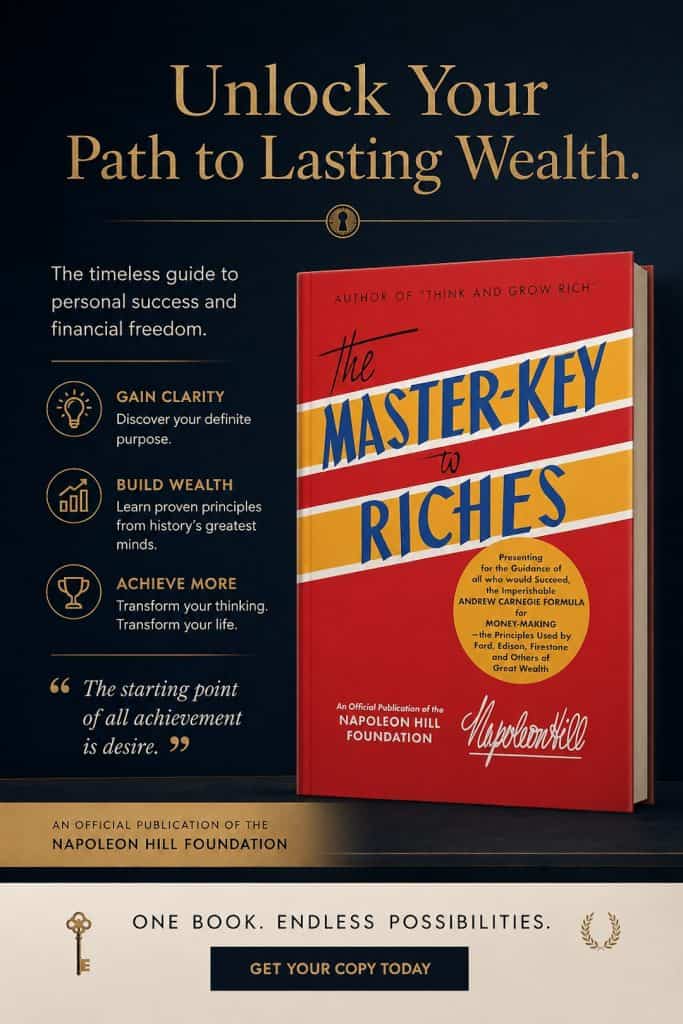
The Master-Key to Riches:
An Official Publication of
The Napoleon Hill Foundation®
The Master-Key to Riches, a powerful formula for self-improvement, shows you how to harness the powers of your will and mind so that you can achieve mental happiness, business success, spiritual vitality and financial superiority.
Millions of readers all over the world are grateful to Dr. Napoleon hill for his now classic Think and Grow Rich®. The Master-Key to Riches provides the key to why some people become successful and how you can become one of them. The Master Keys a marvelous device which, once discovered, may be used to:
- Open the door to sound health
- Reveal the method by which every disadvantage and disappointment can be turned into advantages of priceless value
- Open the door to love and romance
- Renew the spirit of youth
- Lift humble men to positions of power, fame and fortune
Based on the Andrew Carnegie formula for money making, The Master-Key to Riches describes in step-by-step detail the greatest practical philosophy of success. “Riches” means all riches—“not merely those represented by bank balances and material things,” says Napoleon Hill in the introduction to this master-manual for personal achievement.
This amazing philosophy, culled from the success experiences of many of the world’s most powerful and wealthy men, will show you how to succeed in any path of life, whether it be love, wealth, personal satisfaction, faith, or any number of other goals.
The material woven by Napoleon Hill into The Master-Key to Riches has the endorsement of many men whose names have become synonymous with great achievement in the fields of industry, finance and statesmanship.
