
.
Thought for the Day
The Price of a Negative Mental Environment
How Chronic Negativity Quietly Affects Ambition and Performance
Negativity does not always arrive dramatically. Sometimes it works slowly—lowering expectations, draining initiative, and making smaller possibilities feel reasonable.
Spend enough time in a negative atmosphere, and eventually the atmosphere can begin sounding like your own thinking.
Every workplace, household, team, friendship group, and information stream has an atmosphere. Some environments make possibility easier to see. Others repeatedly emphasize what is wrong, who is to blame, why improvement will not work, and why effort probably will not matter. The danger is not one difficult conversation or one discouraging day. Healthy people and organizations must be able to discuss problems honestly. The danger is chronic negativity—when pessimism, complaint, suspicion, defeat, and criticism become the normal background against which everything else is interpreted.
The Hidden Cost
Negative environments do not only affect mood. They can gradually change what people believe is worth attempting.
Napoleon Hill and Mental Attitude
Napoleon Hill® treated Positive Mental Attitude as a foundational principle because attitude influences how circumstances are interpreted and how a person responds to them. A negative mental attitude does more than make a person unpleasant. It can weaken enthusiasm, reduce imagination, undermine initiative, and make setbacks appear more final than they really are.
This becomes especially important when negativity is reinforced by the surrounding environment. Repeated messages eventually become familiar—and familiar ideas are easier to accept without examining them.
.
How a Negative Climate Spreads

.
Negativity Can Lower Ambition Without Announcing It
Ambition rarely disappears all at once. It may shrink through repeated exposure to statements such as: “That will never work.” “People like us do not get opportunities like that.” “Why bother?” “Management will never listen.” “You’re wasting your time.”
Eventually a person may stop sharing the idea before anyone criticizes it. They stop applying before anyone rejects them. They stop experimenting because failure has become socially expensive. At that point, the environment no longer needs to discourage ambition actively. The individual has begun doing it internally.
.
Performance Suffers When Energy Is Spent on Negativity
A negative atmosphere consumes attention. Instead of solving the problem, people discuss who caused it. Instead of preparing for the opportunity, they predict why it will fail. Instead of offering feedback that improves performance, criticism becomes personal or habitual.
The hours may still be worked. Meetings may still happen. Tasks may still be completed. But less mental energy remains available for imagination, initiative, cooperation, and excellence.
.
Positive Mental Attitude Is Not Denial
A constructive mental environment does not require pretending that every circumstance is good. Problems should be identified. Poor performance should be addressed. Risks should be discussed. Difficult facts should not be hidden beneath forced optimism. The distinction is what happens after the problem is named.
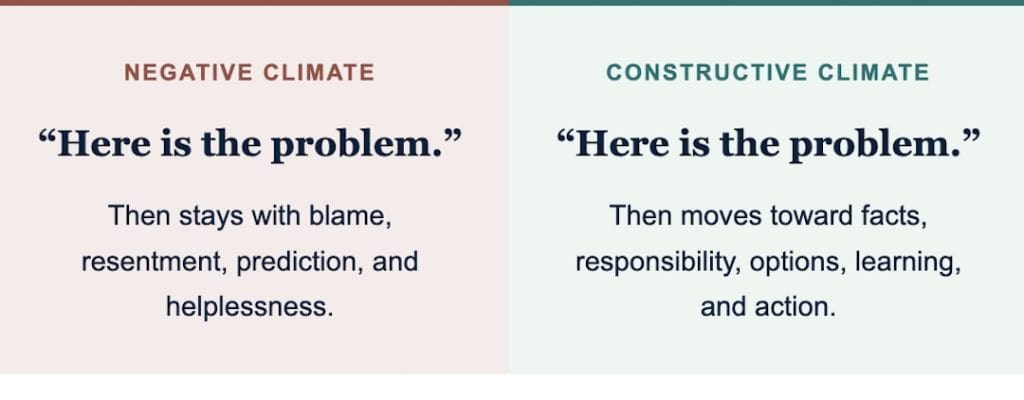
Accurate thinking sees the problem. Positive mental attitude refuses to let the problem become the entire horizon.
Three Questions to Change the Conversation
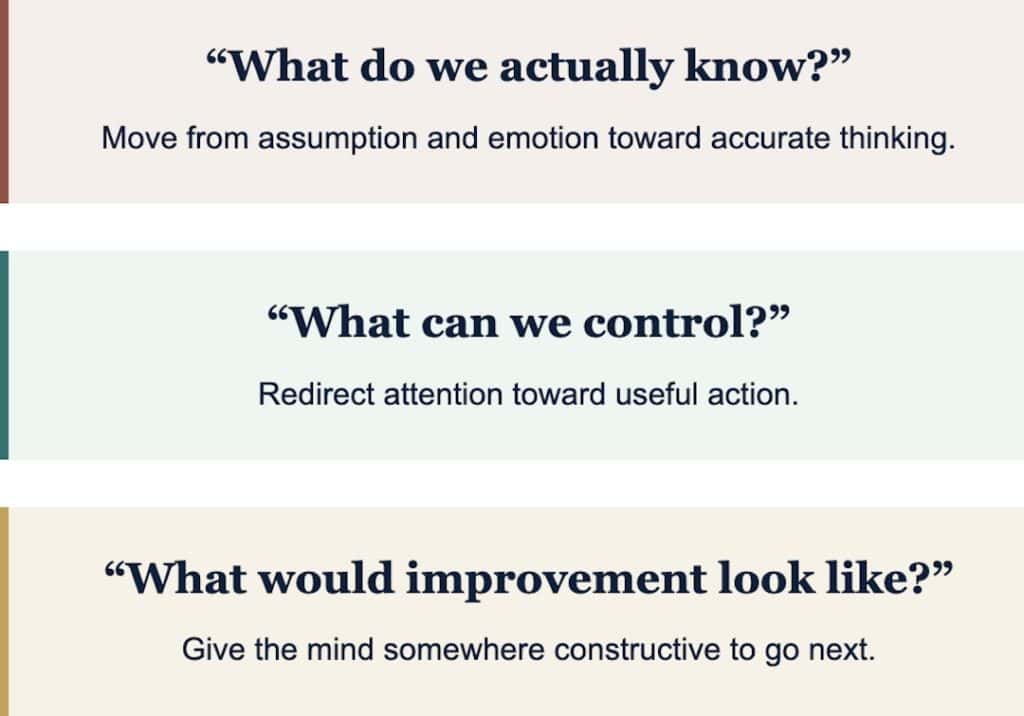
Today’s Practice — Remove One Source of Mental Fog
Identify one repeated source of negativity that weakens your ambition or attention. Reduce its influence—and replace it with one input, conversation, or relationship that strengthens constructive action.
Pay attention to the environments in which your ambition grows—and the environments in which it quietly shrinks. Notice which conversations produce clarity and which produce helplessness. Notice which people challenge you to improve and which encourage you to expect less. Notice what kind of atmosphere you create for others. You may not control every climate you enter. But you can protect your mind, choose your influences carefully, and refuse to let chronic negativity become your permanent forecast.
Guard the atmosphere around your purpose—because what surrounds ambition long enough can either strengthen it or slowly teach it to disappear.


.
Napoleon Hill’s The Power of Decision: How to Stop Overthinking and Achieve Success
From the author of the worldwide bestseller Think and Grow Rich, Napoleon Hill’s Power of Decision reveals the simple truth: success begins with a single, firm choice. In this newly released compilation, The Napoleon Hill Foundation brings back Hill’s essential guide to overcoming doubt, banishing hesitation, and replacing overthinking with decisive action.
Packed with wisdom and practical steps, Hill shows you how to:
- Stop procrastination and act with confidence
- Turn indecision into action
- Make success-driven choices that align with your purpose
- Build momentum and attract prosperity
When you’re chasing personal goals, business success, or a more fulfilling life, The Power of Decision is your roadmap and motivation to clarity and achievement.

3 responses to “The Price of a Negative Mental Environment”
“…the environment no longer needs to discourage ambition actively. The individual has begun doing it internally.”
I can see many times in my life where this became true for me, my reality. I was a SNIOP and eventually gave in to a state of resignation.
Sometimes predicting why it will fail is part of risk analysis or comes from practical experience when a plan is being made by leadership who have never done the work or worked with the clients. In situations like I offer ideas like, “That is likely to fail unless we…” so that it’s still focused on finding solutions.
I refuse to let chronic negativity remain your permanent forecast.
A negative environment stays with blame, resentment, prediction and helplessness. It reduces opportunities, focuses on protecting oneself and managing tension, drains enthusiasm and willingness to take initiative, and people stop expecting improvements.
A constructive environment states the problem, then moves toward facts, responsibility, options, learning and actions.
Be at cause over the environment
We connect with nature beauty