
Thought for the Day
The Lasting Value of Recognition
Why Accomplished People Still Need Encouragement
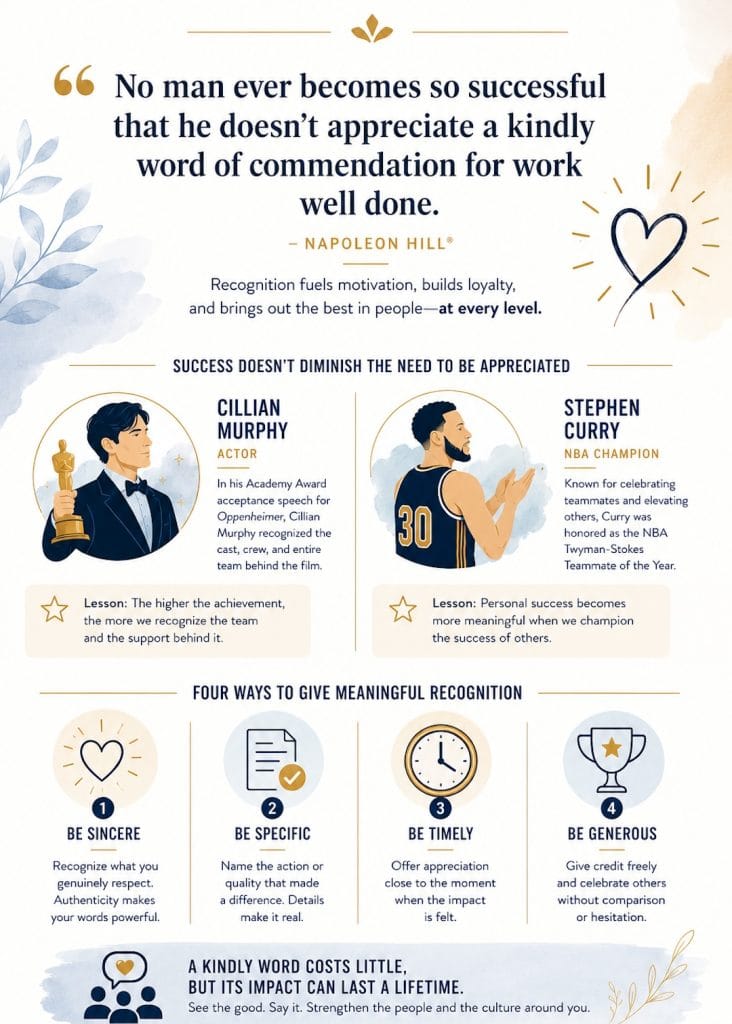
Achievement may change a person’s responsibilities and opportunities, but it does not remove the human need to know that sincere effort has been noticed.
No man ever becomes so successful that he doesn’t appreciate a kindly word of commendation for work well done.” —Napoleon Hill
Success can create a misleading impression. We may assume that an accomplished colleague, experienced leader, celebrated performer, or gifted athlete no longer needs encouragement because their achievements already speak for themselves.
But recognition is not valuable only to those who are uncertain. It matters because every meaningful achievement requires effort, sacrifice, preparation, and persistence that may remain invisible to others.
A sincere word of commendation tells a person, “Your contribution was seen. Your care made a difference. The standard you maintained mattered.”
Recognition does not create excellence by itself, but it can encourage excellence to continue.
The Modern Problem of Invisible Effort
Much of today’s work happens behind screens, across locations, and within complex teams. One person may see the final presentation without seeing the research, revisions, coordination, problem-solving, and late decisions that made it possible.
In fast-moving environments, completed work can quickly be replaced by the next deadline. People finish one demanding assignment and immediately move to another without pausing to acknowledge what was accomplished.
Over time, this creates an emotional cost. Capable people may continue performing well while privately wondering whether their effort is noticed, their contribution is understood, or their presence truly matters.
apoleon Hill® placed great value on cooperation, harmonious relationships, enthusiasm, and a pleasing personality. Genuine appreciation supports each of these qualities because it strengthens goodwill between people.
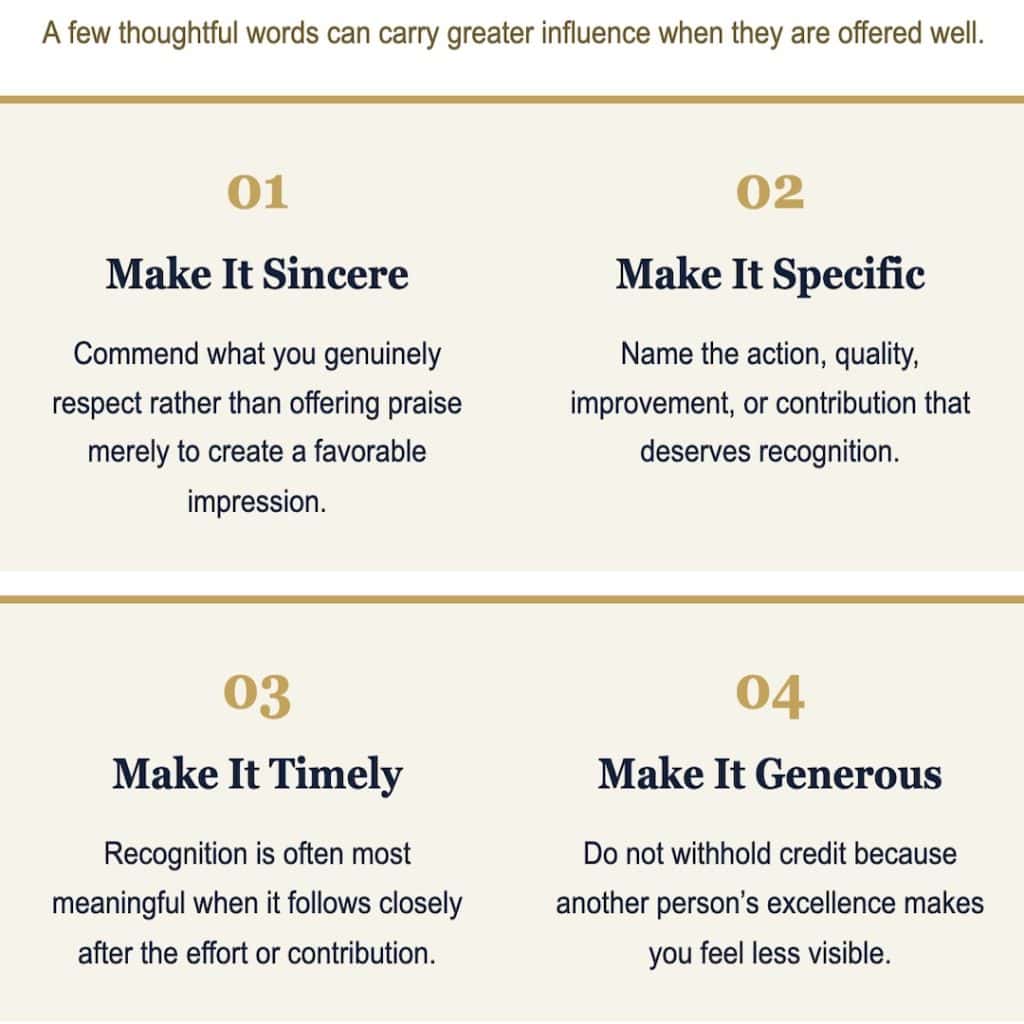
Commendation is most powerful when it is sincere and specific. Empty flattery may briefly please the ego, but meaningful recognition strengthens confidence because it identifies something real.
Instead of saying only, “Good job,” we can acknowledge the patience shown with a difficult customer, the preparation that prevented a problem, the creativity that improved a project, or the persistence that carried the team through a demanding period.
Recognition at the Highest Levels
Accomplished people frequently show that success has not reduced their appreciation for others.
Cillian Murphy: Achievement Shared with a Team
When Cillian Murphy received the Academy Award for his performance in Oppenheimer, he used the moment to recognize the people who had supported the work. He thanked the film’s cast, crew, director, producers, and professional team.
The lesson: The higher the achievement, the more visible the network of cooperation behind it becomes.
Stephen Curry: Celebrating the Success of Others
Stephen Curry’s teammates and coaches have often described his enthusiasm for other players’ accomplishments. Despite his own extraordinary record, he is known for recognizing teammates and showing visible excitement when they succeed.
The lesson: Personal success becomes more constructive when it creates room for others to feel valued.
Four Qualities of Meaningful Recognition
Recognition Is a Form of Leadership
Leaders influence more than performance. They influence the emotional climate in which performance occurs.
When credit is withheld, people may become guarded, competitive, or reluctant to contribute beyond what is required. When sincere effort is acknowledged, trust grows. People become more willing to share ideas, accept responsibility, and support one another.
Recognition does not replace fair compensation, useful feedback, or meaningful opportunity. But these practical rewards do not eliminate the value of hearing that one’s work was handled with excellence.
Commendation Is Not Flattery
Flattery attempts to influence a person by telling them what they want to hear. Commendation recognizes something true and worthy.
Healthy recognition can exist alongside constructive correction. A leader can acknowledge excellent preparation while identifying where the final result must improve. A coach can commend effort while still demanding stronger execution.
In fact, honest appreciation often makes difficult feedback easier to receive because the person knows their strengths and effort have also been seen.
A kindly word cannot perform the work for another person, but it can remind them that their work has meaning.
Today, look beyond titles, confidence, experience, and visible success. The most capable person in the room may still appreciate knowing that their preparation was noticed. The most accomplished leader may still value hearing that their example strengthened someone else.
Offer commendation freely when it is deserved. Give credit without fearing that another person’s success diminishes your own. Recognition costs little, yet it can renew enthusiasm, strengthen loyalty, and encourage a person to continue offering their best.
No level of achievement makes appreciation unnecessary. Success may elevate the work, but a kindly word still reaches the person performing it
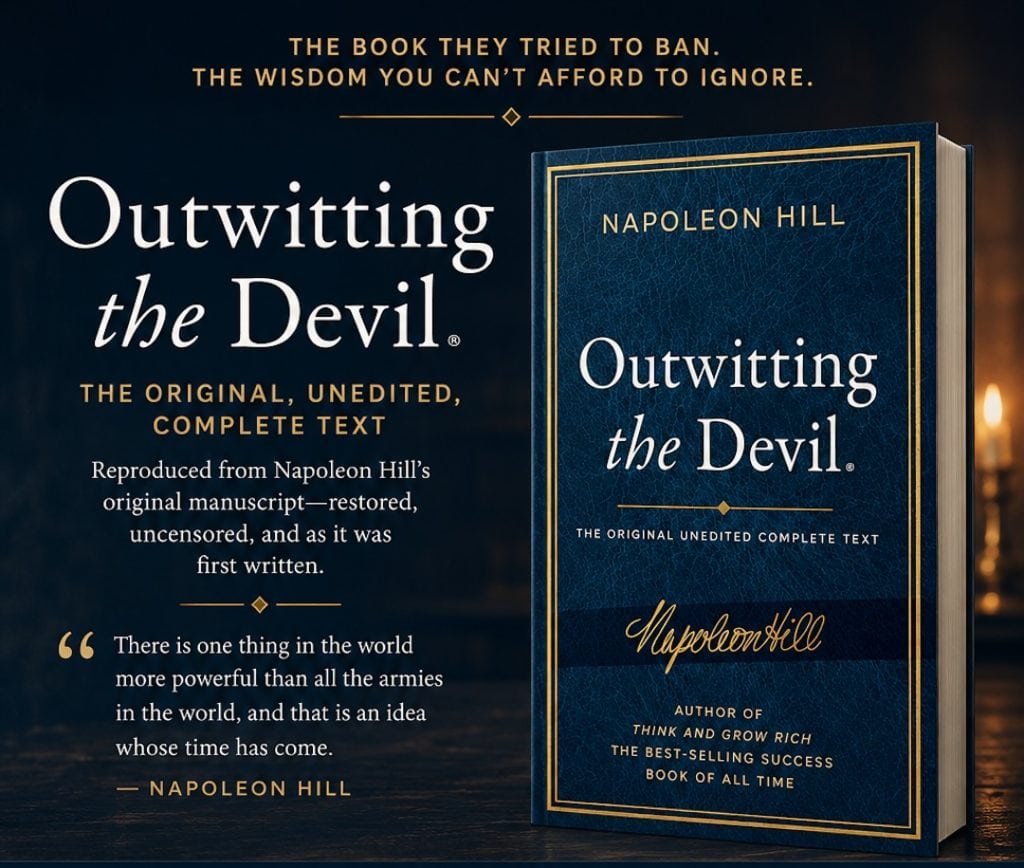
Outwitting the Devil: The Complete Text, Reproduced from Napoleon Hill’s Original Manuscript
Following the success of his 1937 landmark bestseller, Think and Grow Rich, Napoleon Hill wrote Outwitting the Devil, an exposé on the methods the Devil uses to ensnare and control the minds of human beings. Exploring the innermost depths of the psychology of motivation to understand why so many individuals, including himself, cannot find the initiative and courage they need to consistently implement the philosophy of individual achievement, Hill went so far as to interview the Devil himself. The resulting confession from the Devil made this book so controversial as to remain unpublished for over 70 years. Now it is your turn to break the Devil’s code and free yourself from the hidden methods of control that lead to ruin.
In this reproduction of the complete text of Hill’s original manuscript is laid out the exact nature of the power by which the Devil disarms human beings with fear, procrastination, anger, and jealousy so that they do not reach their full potential. This is the same power that paralyzed millions of individuals with fear and despondency during the Great Depression and continues to hold people back from their dreams. Complacency and mediocrity are not the root issue; they are symptoms of deeper ills that we are conditioned by society to accept. But you must open your mind to acquire knowledge and consider facts that might not harmonize with your personal beliefs in order to access a greater truth that will, as Hill said in his original preface, “bring harmony out of chaos in this age of frustration and fear.”
If you have been the victim of lost courage, weakened enthusiasm, and lack of self-discipline—if you are demoralized and plagued by fear, anxiety, overwhelm, or apathy—the seven principles to freedom detailed in this book herald your redemption. You will finally become independent of the causes of failure and misery, break the bonds of destructive habits, and unlock the secret of a natural law as significant as the law of gravity so that you can outwit the devil once and for all.
