
THOUGHT FOR THE DAY
PAUSE • CHOOSE • RESPOND
Responding Instead of Reacting
Strength is not demonstrated by having no emotion. It is demonstrated by deciding what your emotions are allowed to control.
The moment between emotion and action may be brief—but it can change the entire outcome.
A sharp email arrives. Someone interrupts you. A colleague questions your decision. A customer speaks unfairly. A plan changes without warning.
In moments like these, reaction can feel almost automatic. The body tightens, the mind forms an immediate judgment, and words begin preparing themselves before we have decided whether they will improve or damage the situation.
Emotional self-control creates a small but powerful interruption. It allows us to experience the feeling without immediately obeying it.
The Self-Control Principle
You may not control the first feeling—but you can train yourself to control what happens next.
Self-Discipline Begins in the Mind
Napoleon Hill® placed self-discipline among the essential habits of achievement. The principle involves gaining greater control over thought, enthusiasm, habits, and conduct rather than allowing temporary impulses to determine long-term results.
Emotional self-control is one practical expression of that discipline. Anger may contain useful information. Fear may warn us to prepare. Frustration may reveal that a problem needs attention.
But an emotion becomes costly when it is given authority to speak, decide, or act before accurate thinking has had an opportunity to examine the situation.
Reaction or Response?
The difference is often only a few seconds of deliberate thought.
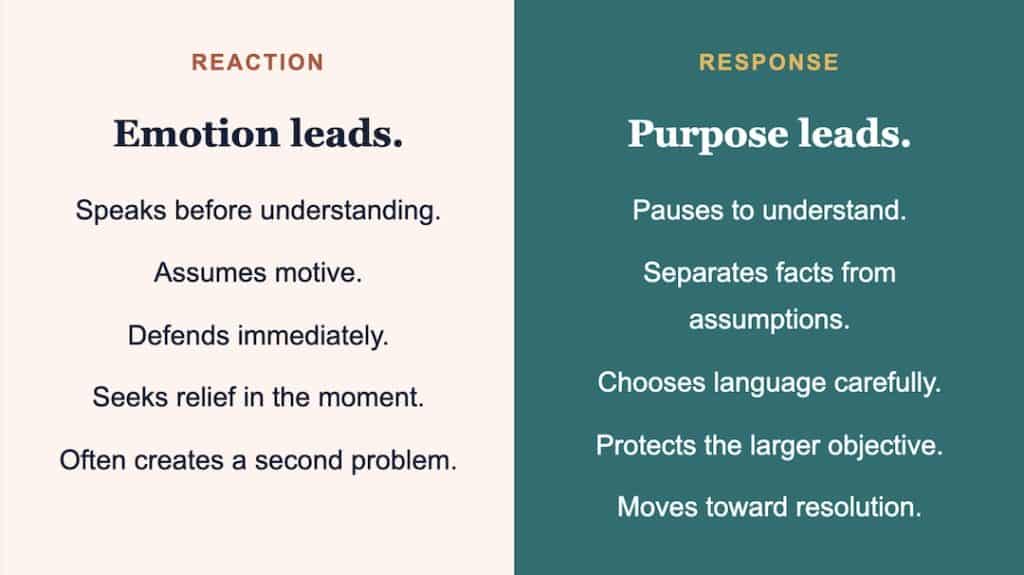
Modern Life Rewards Fast Reactions
Digital communication has shortened the distance between emotion and expression. A message can be sent in seconds. A public comment can be posted while anger is still rising. A misunderstanding can become a permanent record before either person has slowed down enough to clarify what happened. Speed can create the illusion that immediate response is necessary. Often it is not.
A thoughtful delay may protect a relationship, prevent an unnecessary argument, preserve credibility, and produce a better decision than the first emotional impulse would have allowed.
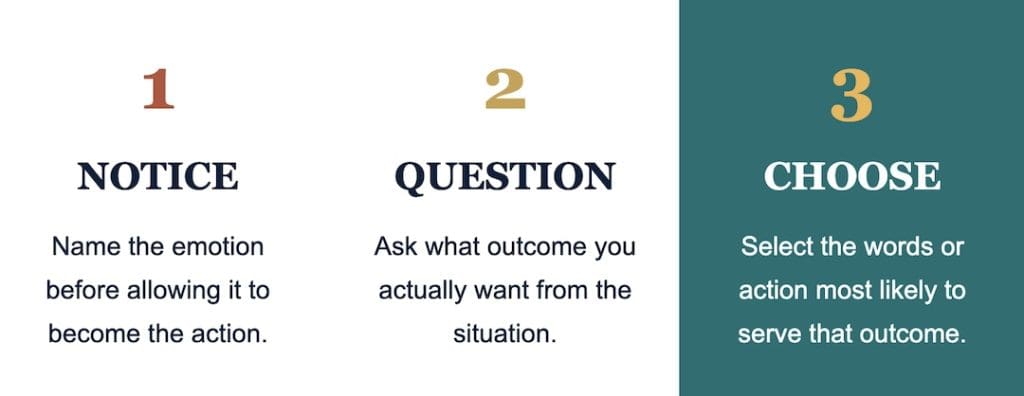
The Three-Second Leadership Pause
Before answering under pressure, create enough space for choice.
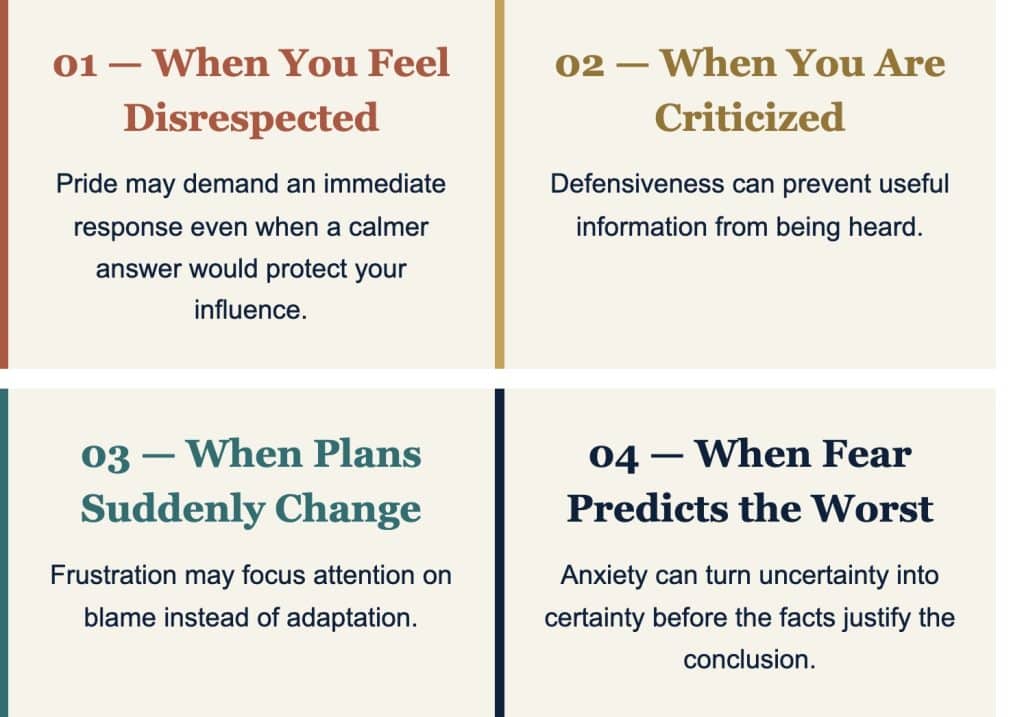
Four Moments That Test Self-Control
Self-Control Is Not Emotional Suppression
Emotional discipline does not require pretending that everything is fine. Anger may need to be expressed. A boundary may need to be set. A difficult truth may need to be spoken.
The difference is intention. Suppression says nothing because emotion feels unacceptable. Self-control chooses the right time, tone, language, and action so the emotion can be communicated without unnecessarily damaging the larger purpose.
Calmness is not passivity. Sometimes the calmest response is also the clearest and strongest boundary.
The goal is not to feel less. It is to become more deliberate about what your feelings are allowed to create.
Emotional Control Multiplies
Leadership Influence
People watch how leaders behave when conditions become uncomfortable. A calm response communicates stability. A thoughtful correction communicates fairness. The ability to listen while challenged communicates confidence. By contrast, unpredictable reactions create uncertainty. People begin managing the leader’s emotions instead of directing their attention toward the work.
Emotional self-control therefore becomes a form of service. It creates an environment in which problems can be discussed without unnecessary fear and decisions can be improved by honest information.
Today, pay attention to the first moment when emotion urges you to move faster than thought.
Do not condemn the emotion. Notice it. Ask what it is trying to tell you. Then bring accurate thinking, self-discipline, and your larger purpose into the conversation.
A reaction may satisfy the emotion for a moment. A thoughtful response can improve the result long after the moment has passed.
The strongest person in the room is often the one who still has a choice after emotion arrives.

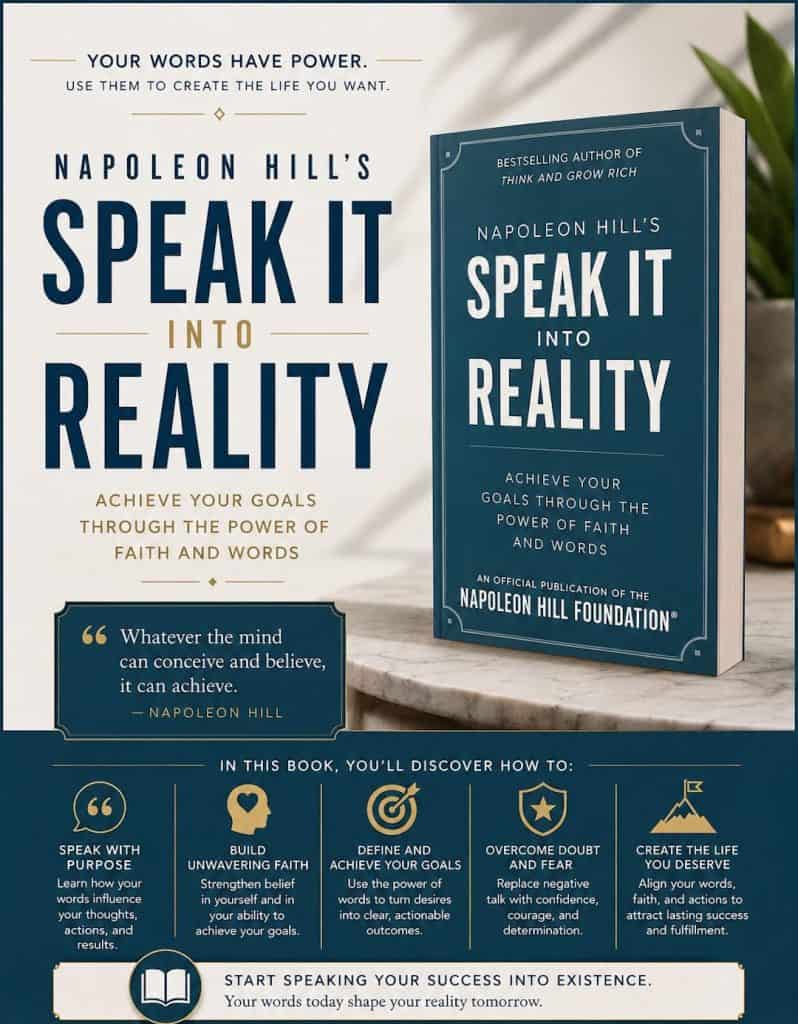
Napoleon Hill’s Speak It Into Reality:
Achieve Your Goals Through
The Power of Faith and Words
Discover the power of autosuggestion with Speak It Into Reality, a guide inspired by Napoleon Hill’s timeless principles. Learn how the words you speak and the thoughts you hold can reprogram your subconscious, empowering you to achieve your greatest goals.
This book dives into the science and philosophy behind autosuggestion, revealing how faith, belief, and repetition can shape your reality. Learn how to:
- Craft affirmations that rewire your subconscious for success.
- Develop unwavering faith in your goals and dreams.
- Leverage the emotions of love and confidence to amplify your affirmations.
- Overcome negative thought patterns and replace them with positive intentions.
Whether you’re striving for financial success, personal growth, or spiritual fulfillment, this book provides the tools to transform your mindset and speak your dreams into existence. Start changing your reality—one word at a time.
