
Thought for the Day
Learning to Think Independently
Protecting Your Judgment in a World Full of Opinions
Independent thinking is not rejecting everyone else’s ideas. It is refusing to surrender your judgment before examining them.
The loudest opinion is not
automatically the wisest one.
Never before have so many opinions been available so quickly. News, social media, podcasts, coworkers, commentators, influencers, experts, friends, and strangers can all compete for our attention before we have had time to decide what we actually think.
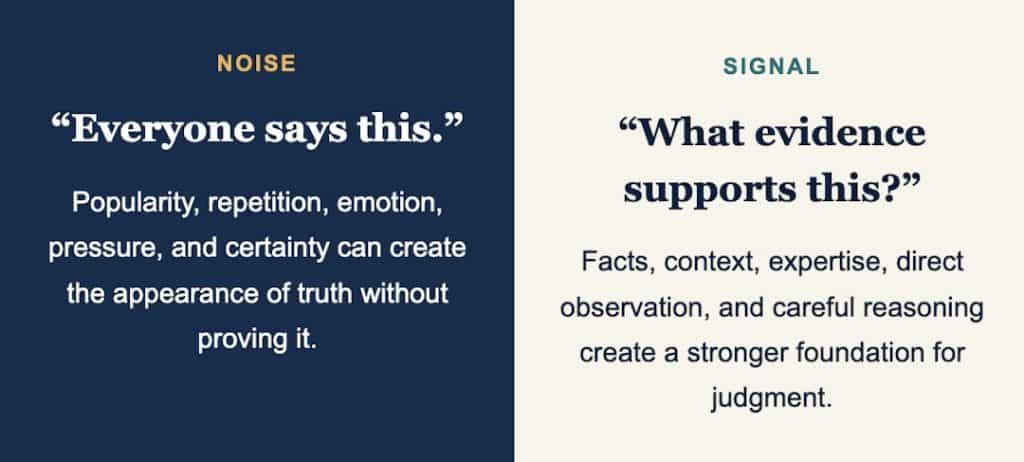
Repetition can make an idea feel true. Popularity can make a conclusion appear settled. Confidence can make a speaker sound more informed than the evidence justifies.
Independent thinking interrupts that process. It creates enough mental distance to ask a simple but powerful question: “What do the facts actually support?”
Napoleon Hill and Accurate Thinking
Napoleon Hill® placed great importance on accurate thinking—the ability to separate facts from opinions and organize thought around a definite purpose.
Independent thinking fits naturally within that philosophy. A definite purpose provides direction, but accurate thinking helps protect that direction from rumor, fear, social pressure, and the opinions of people who may not understand your objective.
The aim is not stubbornness. Independent thinkers seek good counsel—but they do not confuse counsel with surrendering responsibility for the final decision.
The Pressure to Borrow Other People’s Conclusions
Independent thinking can be uncomfortable because agreement often feels safer. Belonging to a group can make us hesitant to ask questions that might create tension.
We may repeat an opinion because everyone around us seems to share it. We may support a strategy because an authority figure proposed it. We may dismiss an unfamiliar idea because it conflicts with what our preferred group already believes.
In each case, the danger is not agreement itself. The danger is arriving at agreement without having examined the reasoning that produced it.
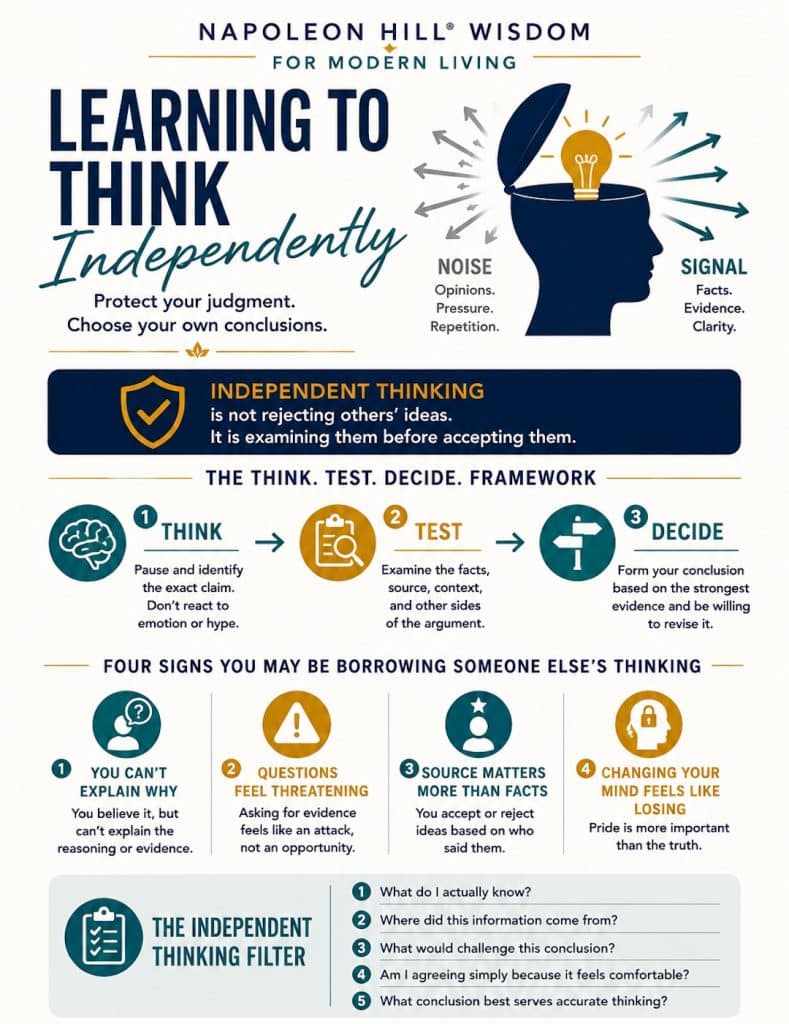
Think. Test. Decide.
A simple framework for protecting your judgment without closing your mind.

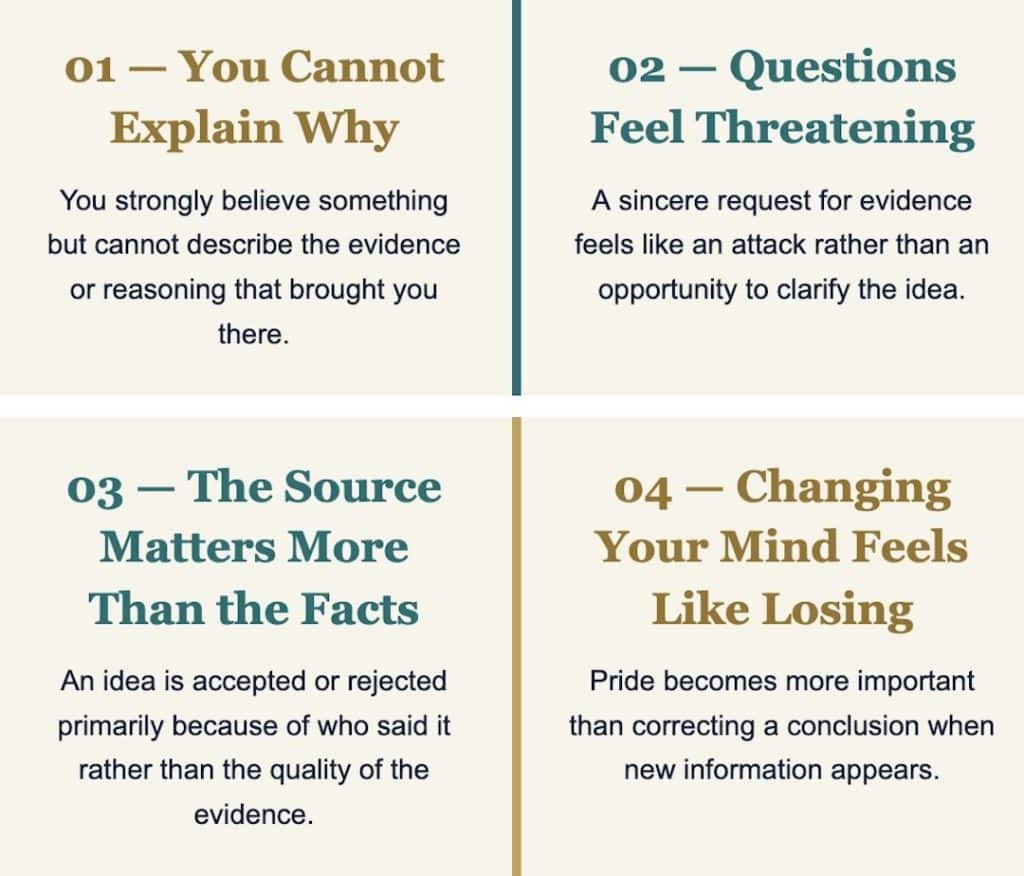
Four Signs Your Thinking May Be Getting Borrowed
Independence Is Not the Same as Isolation
Independent thinkers still need other people. In fact, strong independent thought often depends on exposure to people who possess knowledge we do not.
Seek qualified experts. Listen to colleagues. Study opposing arguments. Build a Master Mind of people willing to challenge your assumptions rather than simply confirm them.
The difference is that you listen to gather knowledge—not to outsource the responsibility of thinking.
An open mind listens widely. An independent mind decides carefully
Independent Thinking Requires Courage
Thinking independently becomes most difficult when the conclusion is unpopular. It may require asking a question others would rather avoid or refusing to repeat a claim that has not been adequately supported.
Courage does not require becoming argumentative. You can disagree without disrespect. You can remain uncertain without becoming weak. You can change your mind without losing credibility.
Intellectual strength is demonstrated not by never changing a conclusion, but by refusing to protect a conclusion that the facts no longer support.
Today, notice one opinion you have repeated often enough that it feels unquestionably true. Instead of immediately defending it, examine it.
Ask where it came from. Identify what is fact and what is interpretation. Seek a thoughtful perspective that challenges your current view. Then make your own judgment.
Independent thinking is not about always being different. Sometimes careful thought will lead you to the same conclusion as everyone else.
The difference is that the conclusion will be yours—not merely borrowed from the crowd.
Napoleon Hill’s Speak It Into Reality: Achieve Your Goals Through the Power of Faith and Words
Discover the power of autosuggestion with Speak It Into Reality, a guide inspired by Napoleon Hill’s timeless principles. Learn how the words you speak and the thoughts you hold can reprogram your subconscious, empowering you to achieve your greatest goals.
This book dives into the science and philosophy behind autosuggestion, revealing how faith, belief, and repetition can shape your reality. Learn how to:
- Craft affirmations that rewire your subconscious for success.
- Develop unwavering faith in your goals and dreams.
- Leverage the emotions of love and confidence to amplify your affirmations.
- Overcome negative thought patterns and replace them with positive intentions.
Whether you’re striving for financial success, personal growth, or spiritual fulfillment, this book provides the tools to transform your mindset and speak your dreams into existence. Start changing your reality—one word at a time.
