
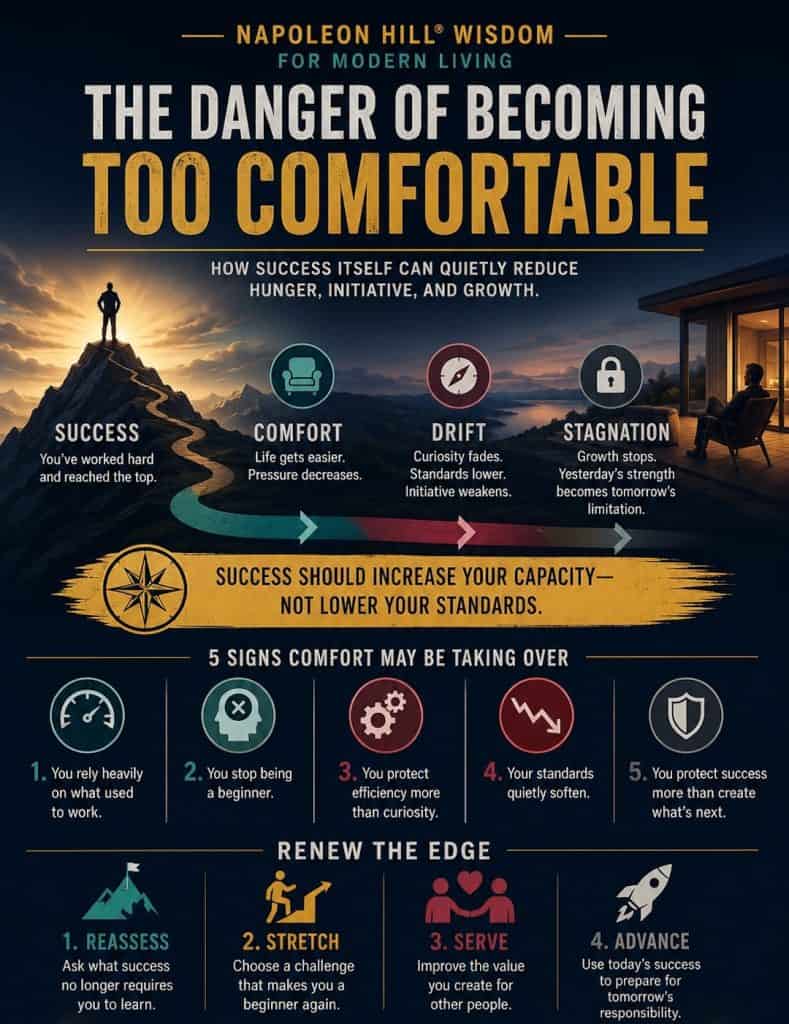
The Danger of Becoming Too Comfortable
How Success Itself Can Quietly
Reduce Hunger, Initiative, and Growth
Success can solve problems—but it can also
remove some of the pressure that once
made growth necessary.
The habits that helped you arrive are not always the habits that will keep you growing.
Most discussions about success focus on the struggle required to reach it. We talk about persistence, sacrifice, risk, long hours, self-discipline, and the willingness to keep going when progress is uncertain. But there is another challenge that receives less attention: what happens after life becomes easier?
Once the promotion is earned, the business is stable, the reputation is established, or the financial pressure has eased, the urgency that once fueled growth may begin to soften.
The Comfort Paradox
Success can give you more freedom — and quietly reduce the pressure to keep becoming better.
Napoleon Hill and Personal Initiative
Napoleon Hill treated personal initiative as a force that creates opportunity, advancement, and future growth. That principle matters just as much after success as it does before it.
It is possible to become comfortable enough that initiative is no longer automatic. The work still gets done. The reputation still carries weight. The systems still produce acceptable results. But acceptable performance can quietly replace purposeful improvement.
.
How Comfort Turns Into Drift
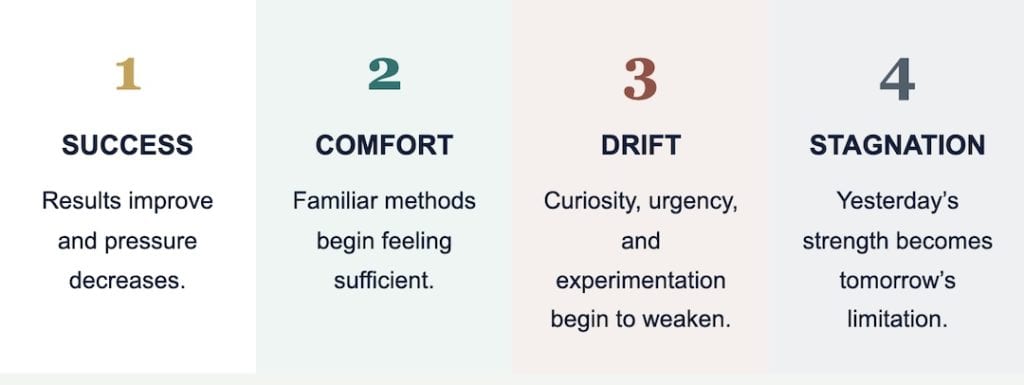
Success Can Reduce Hunger
Early ambition often benefits from necessity. You need the client. You need the job. You need the skill. You need the opportunity. That pressure sharpens attention. Once success provides security, the reason to stretch must become more internal. Growth can no longer depend only on necessity. It must become a chosen standard.
.
The Extra Mile Matters
Most When You No
Longer Have to Take It
Hill’s principle of going the extra mile becomes especially revealing after success. Anyone can push harder when survival requires it. A higher standard appears when the minimum would be enough—but you still choose to improve the work, serve better, learn more, and prepare for what is next. That is how success becomes a platform rather than a stopping point.
.
Past Success Can Become a Beautiful Trap
Success creates evidence that your methods work. That evidence deserves respect—but not permanent authority. Markets change. Technology changes. People change. Your own abilities and responsibilities change. The method that created one level of achievement may not be enough for the next.
Success should increase your capacity—not lower your standards.
Replace Pressure With Purpose
You do not need to manufacture hardship in order to stay ambitious. The healthier goal is to replace external pressure with an internal standard. Instead of asking, “What do I have to do?” ask, “What am I capable of becoming now that I have more resources, experience, and freedom?”
.
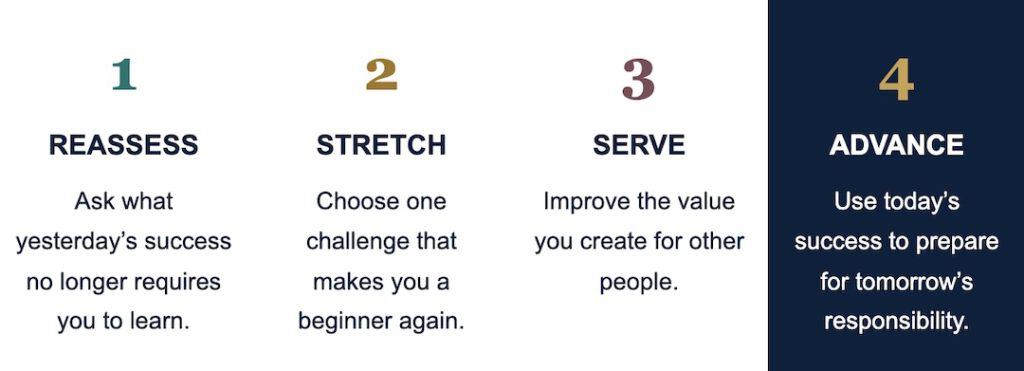
Renew the Edge
.
Rest Is Not the Enemy
Comfort and recovery are not the same thing. Rest restores your ability to perform. Complacency slowly reduces the desire to perform at your best. One prepares you for renewed effort. The other makes renewed effort feel increasingly unnecessary.
Today’s Practice
Choose One Useful Discomfort
Learn something unfamiliar. Ask for difficult feedback. Improve a process that already works. Take on a challenge that requires you to grow instead of simply repeat.
Success should make your life better. It should create freedom, stability, opportunity, and room to enjoy what you have built. But do not let the comfort created by yesterday’s effort quietly remove the initiative required for tomorrow’s growth. Keep learning. Keep raising the standard. Keep finding new ways to contribute.
The goal is not to remain uncomfortable forever. It is to remain alive to possibility after comfort becomes available.
.
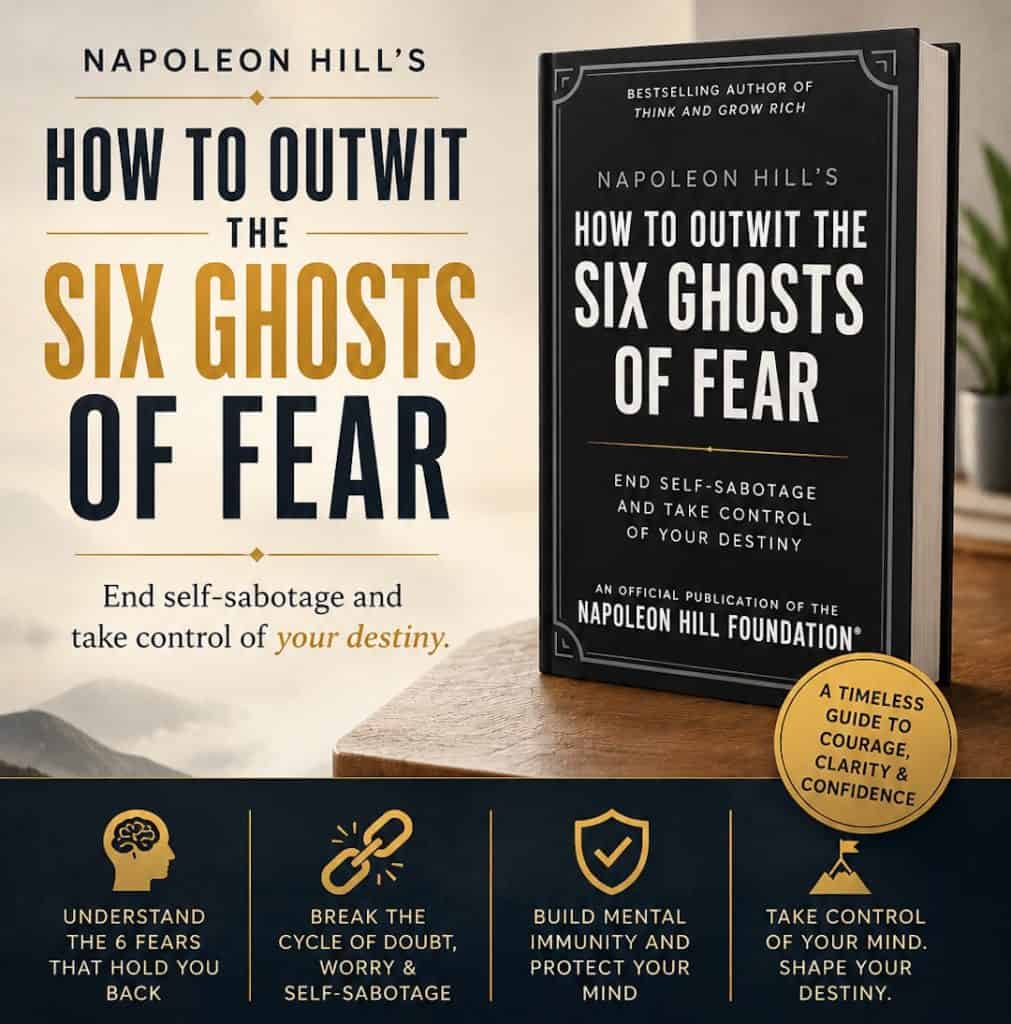
Napoleon Hill’s How to Outwit the Six Ghosts of Fear: End Self-Sabotage and Take Control of Your Destiny
Fear is the invisible enemy that robs people of their dreams, decisions, and destiny. In How to Outwit the Six Ghosts of Fear, legendary success thinker Napoleon Hill reveals the six universal fears that haunt our lives—fear of poverty, criticism, ill health, loss of love, old age, and death—and shows you how to defeat them once and for all.
Drawn from Hill’s groundbreaking work Think and Grow Rich, this standalone guide offers timeless wisdom, practical steps, and deep psychological insight into the fear-driven thoughts and habits that sabotage success.
Inside, you’ll discover:
- How indecision and doubt lead to fear—and how to interrupt the cycle
- A detailed analysis of the six most common fears and how they control your actions
- Powerful self-analysis questions to uncover and confront your own limiting beliefs
- How to build immunity to negative influences and reclaim control of your thoughts
- The one thing you do control—your mind—and how it determines your destiny
“The only thing you can control is your mind.” —Napoleon Hill
If you’re ready to conquer fear and unlock the power of your mind, How to Outwit the Six Ghosts of Fear is your ultimate guide to personal power, resilience, and success.

3 responses to “The Danger of Becoming Too Comfortable”
“What am I capable of becoming now that I have more resources, experience, and freedom?”
Asking this question excites me. Knowing I’m here to be of the greatest service by continuously becoming the purest and best possible version of myself. I read this blog post with another question in mind.
“And then what?”
There is always a next version to evolve, expand and grow into and more to learn and that’s what’s so exciting! We never “make it.” We’re always “making it.”
I love this question, “What am I capable of becoming now that I have more resources, experience, and freedom?”
This topic enforces the idea that success is not an endgame but rather a levelling up.
Today was about receiving difficult feedback. I will reflect and move forward with new awareness.
Great insights on maintaining the mindset, ‘keeping yourself mentally broke’.