.
Budgeting Time and Money
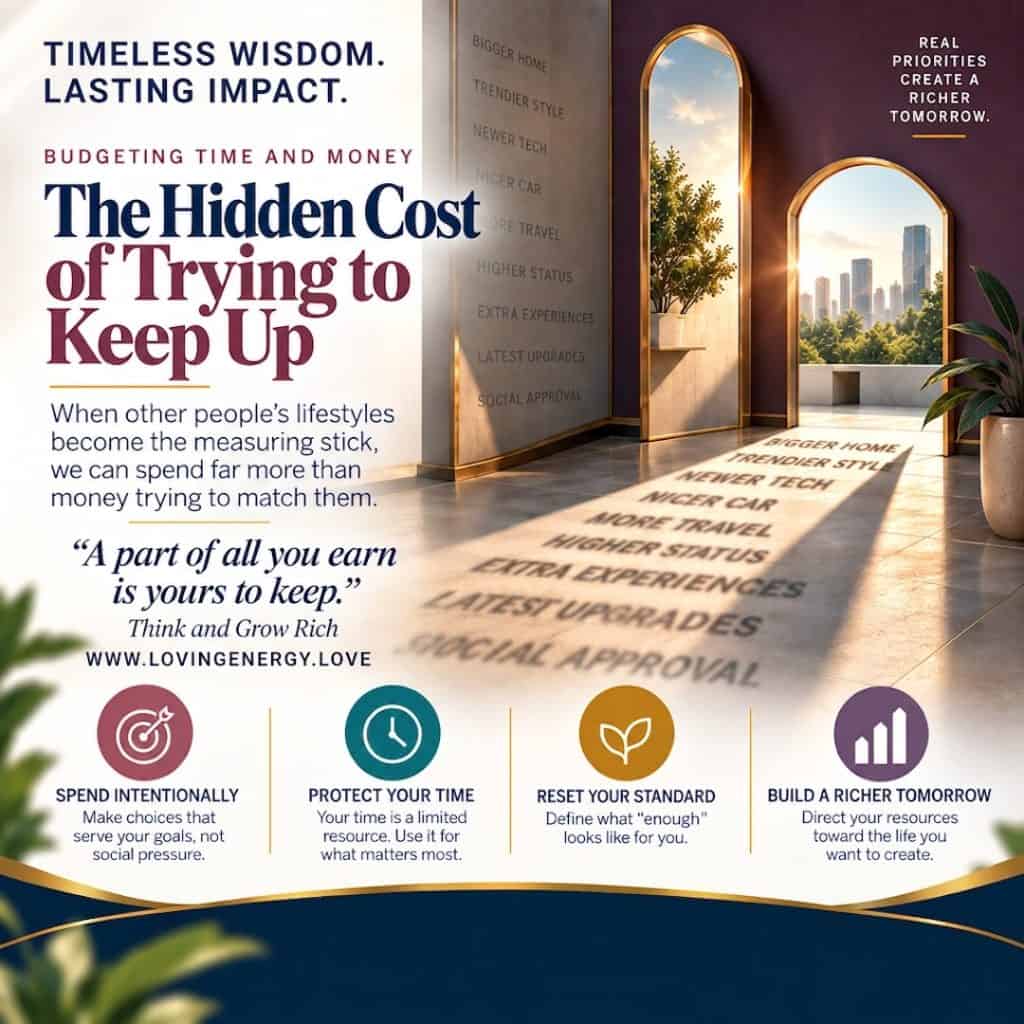
The Hidden Cost of Trying to Keep Up
When other people’s lifestyles become the measuring stick, we can spend far more than money trying to match them
Keeping up has always existed. People have long compared homes, clothes, cars, careers, vacations, possessions, and status. What has changed is the frequency with which we are exposed to what everyone else appears to have. Today, a few minutes of scrolling can place us inside dozens of carefully selected lives. Someone is traveling. Someone bought a new house. Someone upgraded the kitchen. Someone has the newest phone. Someone appears to be eating better, dressing better, earning more, exercising more, and enjoying life more. The comparison can be subtle. We may not consciously think, I need what they have. We simply begin adjusting our idea of what is normal. The perfectly functional car begins to feel old. The ordinary weekend feels uneventful. The home that once felt comfortable suddenly appears unfinished. A purchase that would once have seemed extravagant starts to feel expected.
Lifestyle inflation often begins before the purchase.
It begins when our definition of “enough” quietly changes.
The Invisible Bill
The price of comparison is not always printed on the receipt.
.
Impulse spending usually looks like a money problem, but the decision often begins somewhere else. We see something repeatedly. Familiarity increases. Desire grows. A limited-time offer introduces urgency. One click removes friction. The purchase may be finished before we have seriously considered whether the item serves a meaningful purpose. And then there is lifestyle inflation—the tendency for spending to rise as income, access, or expectations rise. An increase in income can improve life. There is nothing inherently wrong with buying something beautiful, traveling, enjoying comfort, or rewarding years of hard work. The question is whether the decision is actually yours.
.
What “Keeping Up” Can Cost
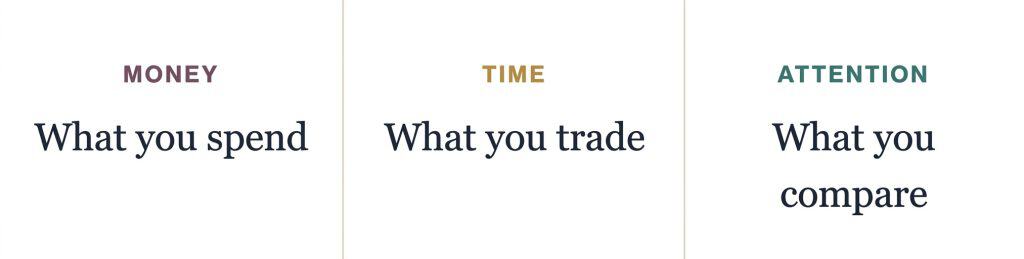
| Money | Purchases that compete with savings, debt reduction, investing, education, or other priorities. |
| Time | Additional hours worked, managed, maintained, financed, cleaned, upgraded, or worried about. |
| Attention | Mental energy spent monitoring what others have and evaluating whether you measure up. |
| Freedom | The flexibility to choose differently later because today’s money and time have already been committed. |
This is why comparison can create a strange kind of poverty even when income is increasing. The standard keeps moving. Yesterday’s upgrade becomes today’s baseline. Satisfaction becomes temporary because the environment quickly supplies another object, experience, or lifestyle to compare against. The solution is not deprivation. It is direction.
.
A budget is not only a limit. It is a statement of what matters.
Napoleon Hill’s philosophy includes the principle of Budgeting Time and Money. Both resources are limited, and both become more powerful when they are directed deliberately instead of being consumed by whatever asks for them next. Hill’s philosophy places Budgeting Time and Money alongside Creative Vision, Sound Physical Health, Learning from Adversity and Defeat, and Cosmic Habit Force when it comes to resilience and growth.
Seen through that lens, budgeting is not simply about spending less. It is about deciding in advance what your money and your time are supposed to accomplish. That makes social comparison particularly costly. When someone else’s priorities begin directing your resources, your own definite purpose receives what is left.
.
Before You Keep Up, Pause
Ask four simple questions:
- Would I want this if nobody else ever saw it?
- What future priority will this money no longer be available for?
- What additional time will owning this require from me?
- Does this support my priorities—or someone else’s picture of success?
.
Today’s Practice
Create a Pause Between Wanting and Buying.
For one nonessential purchase this week, do not say yes or no immediately. Give the desire time to separate from the moment that created it. Wait a day. Leave the item in the cart. Step away from the advertisement. Ask whether you still want it after the comparison, urgency, or excitement has faded. If the answer is still yes and the purchase fits your priorities, enjoy it. The goal is not to stop enjoying money. It is to make sure your money—and your time—are supporting a life you actually chose.
You do not have to keep up with someone else’s life.
You have to build one that reflects your own priorities.