
.
Napoleon Hill Wisdom for Modern Living
Turning Envy Into Education
Instead of Comparing, Study
Comparison asks, “Why them?”
Education asks, “What can I learn?
.
Social media has made comparison almost effortless. Within minutes, we can see someone else receiving the promotion, launching the business, finishing the book, buying the house, reaching the audience, improving their health, traveling somewhere beautiful, or achieving a goal we secretly want for ourselves.
The emotional reaction can arrive quickly: Why are they ahead of me? What do they have that I do not? Why does their progress seem easier?
Left undirected, envy can consume attention without producing anything useful. But examined carefully, it may reveal something valuable: a desire that has not yet been honestly acknowledged.
A Better Question
What exactly about this person’s success is attracting my attention—and what can it teach me about my own goals?
Napoleon Hill and the Control of Attention
Napoleon Hill emphasized the importance of directing the mind rather than allowing destructive emotions to direct it. Envy, jealousy, fear, doubt, and resentment can consume attention that might otherwise be applied to purpose, planning, specialized knowledge, and action. The goal is not to pretend that envy never appears. The stronger response is to refuse to let it remain useless.
Instead of feeding resentment, redirect attention toward study. Ask what habits, skills, relationships, decisions, persistence, or preparation may have contributed to the result you admire.
.
Turn Emotion Into Information
The feeling becomes useful when it leads to a better question.

Social Media Shows Results Better
Than It Shows Process
.
Comparison becomes especially misleading when we compare our complete experience with someone else’s selected moments.
We see the announcement, but not necessarily the rejected applications. We see the finished business, but not the uncertain first year. We see the performance, but not the rehearsals. We see the audience, but not the years spent creating work when very few people were paying attention.
Education requires looking beyond the visible result and becoming curious about the process that produced it.
.
Not Everything You Envy Is
Something You Actually Want
Envy can also reveal borrowed ambition.
You may envy someone’s visibility without wanting the responsibilities that created it. You may envy a lifestyle that does not fit your values. You may envy an achievement mainly because other people appear impressed by it.
A definite purpose protects you from chasing every success you see. The question is not simply, “Do I want what they have?” It is, “Does this represent something that genuinely belongs in my own definition of success?”
Admiration becomes valuable when it produces curiosity, and curiosity becomes valuable when it produces action.
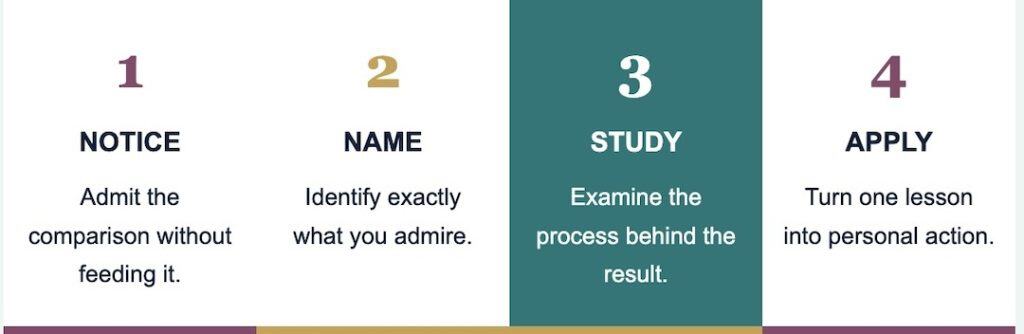
The Envy-to-Education Method
Use comparison as a temporary signal—not a permanent state of mind.
.
Learn From Their Path Without Abandoning Yours
Education does not mean imitation.
Someone else’s strategy may not fit your circumstances. Their timeline may not be yours. Their strengths may differ from yours. Their definition of achievement may not reflect your definite purpose.
Study principles rather than copying appearances. Learn what is transferable, adapt it intelligently, and return your attention to the work in front of you.
Today’s Practice — Study One Person You Admire
Look beyond the result. Identify one habit, skill, decision, or principle behind their progress—and put your version of it into practice.
The next time another person’s progress creates discomfort, resist the temptation to turn their success into a judgment about your own life.
Become curious instead.
Study what they do well. Look for the discipline behind the visible achievement. Identify what applies to your own definite purpose. Then redirect your attention from their progress to your next action.
Envy asks you to compare your life with theirs. Education asks you to improve your own.

,.
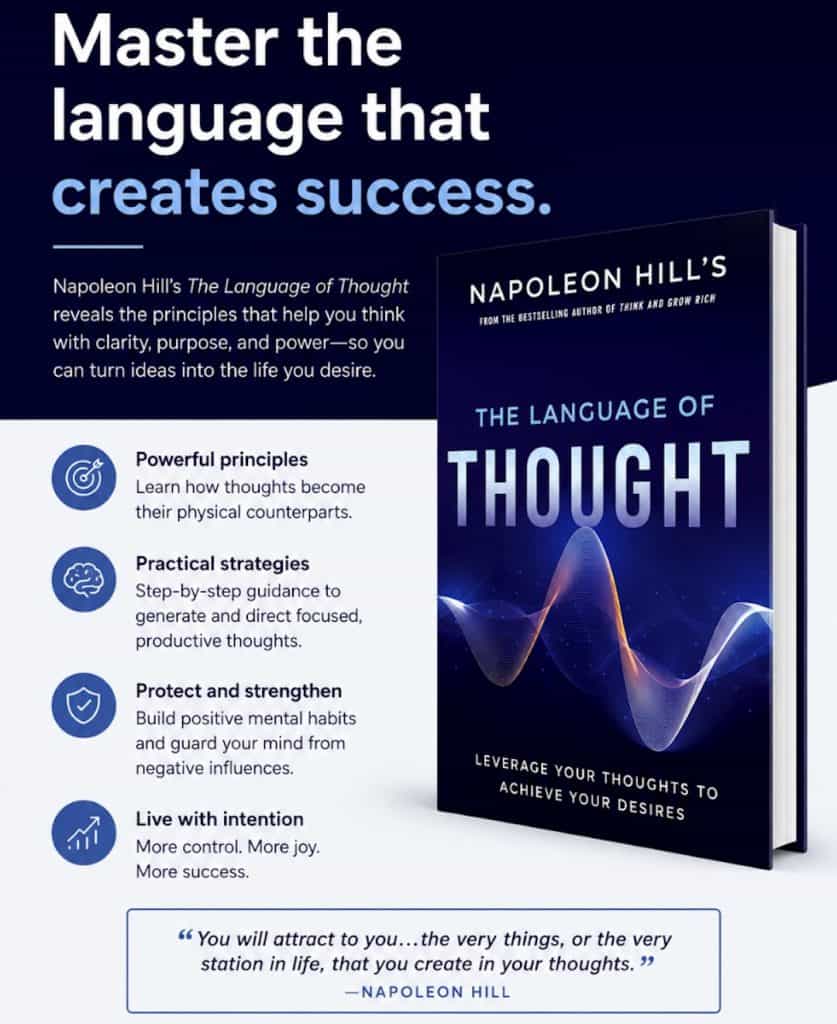
Napoleon Hill’s The Language of Thought: Leverage Your Thoughts to Achieve Your Desires
Napoleon Hill’s The Language of Thought is your guide to understanding, generating, and directing more powerful thoughts so that you can live and work with more intention, joy, and success.
The single most powerful tool available to human beings is not money, physical strength, influence, or a network; it is the mind. Our thoughts determine our outcomes in life, as well as our ability to enjoy the journey. In order to harness our thoughts to create material success, we do not require any personal advantage such as wealth, connections, or education. We simply need to utilize the mental resources already within our possession by cultivating a thorough understanding of the workings of the mind and the manner in which thoughts may be transformed into their physical counterparts.
In order to create positive change in our lives, we must learn to speak the language of thought, which has its own unique formula. This book contains Napoleon Hill’s best lessons on the components that make up the language of thought, as well as easy-to-follow, modernized instructions on how to leverage these elements to generate more powerful thoughts. In particular, you will discover how to:
- Magnetize your thought impulses with desire
- Refine your thoughts with definiteness of purpose
- Control and direct your emotions to productive ends
- Support your goals with a compelling network of motives
- Create positive thought habits through concentration and repetition
- Protect your mind from negative external influences
The more you practice the principles outlined in this book, the more fluency you will gain in the language of thought. As your facility for this language develops, you will experience greater control over your thoughts and emotions, which will enable you to enjoy more success in the pursuit of your definite major purpose. There are no limitations to the mind conditioned for achievement. Are you ready to write your success story with more powerful language?
