
Thought for the Day
Your Environment Is Shaping You
How People, Information, and Surroundings Influence Thought
What surrounds you repeatedly does not remain outside of you. It gradually influences what you notice, expect, believe, and do.
You cannot control everything around you—but you can become far more deliberate about what you repeatedly allow around you.
We often think of our thoughts as entirely personal—as though every belief, expectation, and decision originates independently inside our own minds.
But thought develops within an environment. Conversations influence what seems normal. Repeated information influences what seems important. Physical surroundings influence attention, mood, and behavior. Even the expectations of the people around us can gradually affect the expectations we hold for ourselves.
This influence may be subtle precisely because it happens through repetition rather than one dramatic event.
The Environment Principle
Whatever repeatedly receives your attention eventually begins influencing your mental habits.
Napoleon Hill and the Direction of Attention
Napoleon Hill® emphasized controlled attention—the deliberate direction of mental energy toward a definite purpose.
That principle becomes especially relevant in modern life because attention is constantly being invited somewhere. Notifications, conversations, entertainment, headlines, advertising, social media, workplace culture, and personal relationships all compete to shape what occupies the mind.
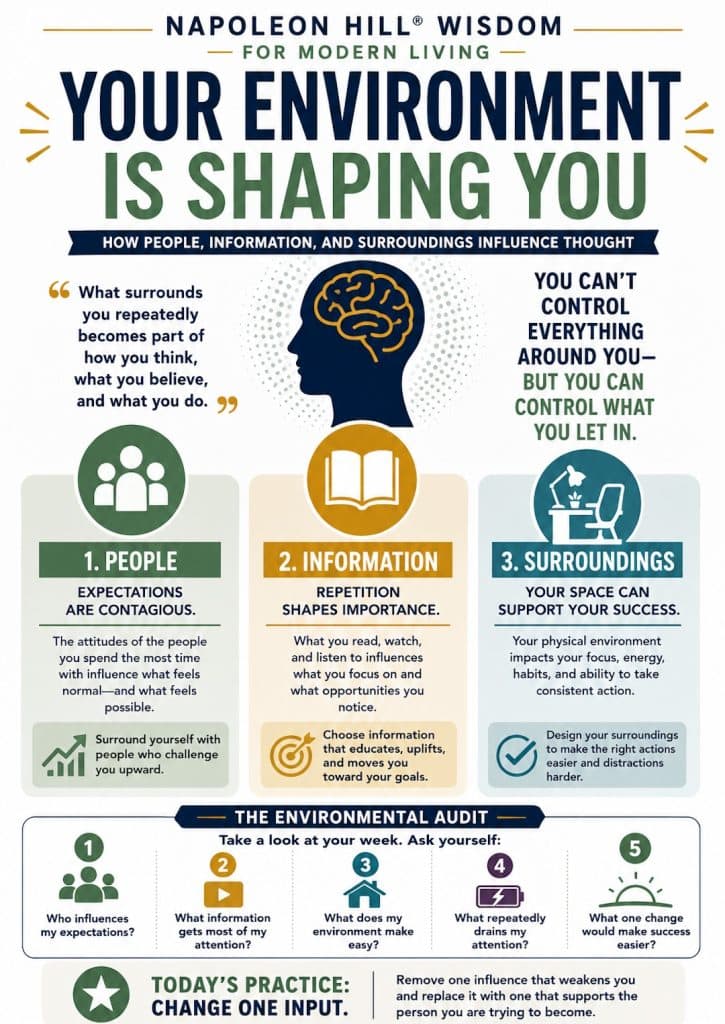
The Three Environments Around Your Mind
Each one influences thought in a different way.
Environment 1 — PEOPLE
Expectations Are Contagious
Spend enough time around people who constantly dismiss possibilities and limitation begins to feel reasonable. Spend time around disciplined, constructive people and higher standards begin to feel normal.
Environment 2 — INFORMATION
Repetition Shapes Importance
What you repeatedly read, watch, and listen to influences which problems dominate your attention and which possibilities remain visible to you.
Environment 3 — SURROUNDINGS
Your Space Can Support—or Fight—Your Intentions
A distracting environment makes concentration more expensive. A prepared environment reduces friction and makes the desired behavior easier to begin.
Pay Attention to What Becomes “Normal”
Human beings adapt. That is one of our strengths—but it also means the attitudes surrounding us can gradually become difficult to notice.
If excuses are normal in a group, excuses begin requiring less justification. If preparation is normal, preparation feels expected. If people regularly discuss ideas, goals, books, opportunities, and solutions, the mind receives a different set of prompts than it receives from an atmosphere dominated by gossip, resentment, and helplessness.
The point is not to judge people harshly. It is to become aware of what repeated association is reinforcing within you.
You Have an Information Diet
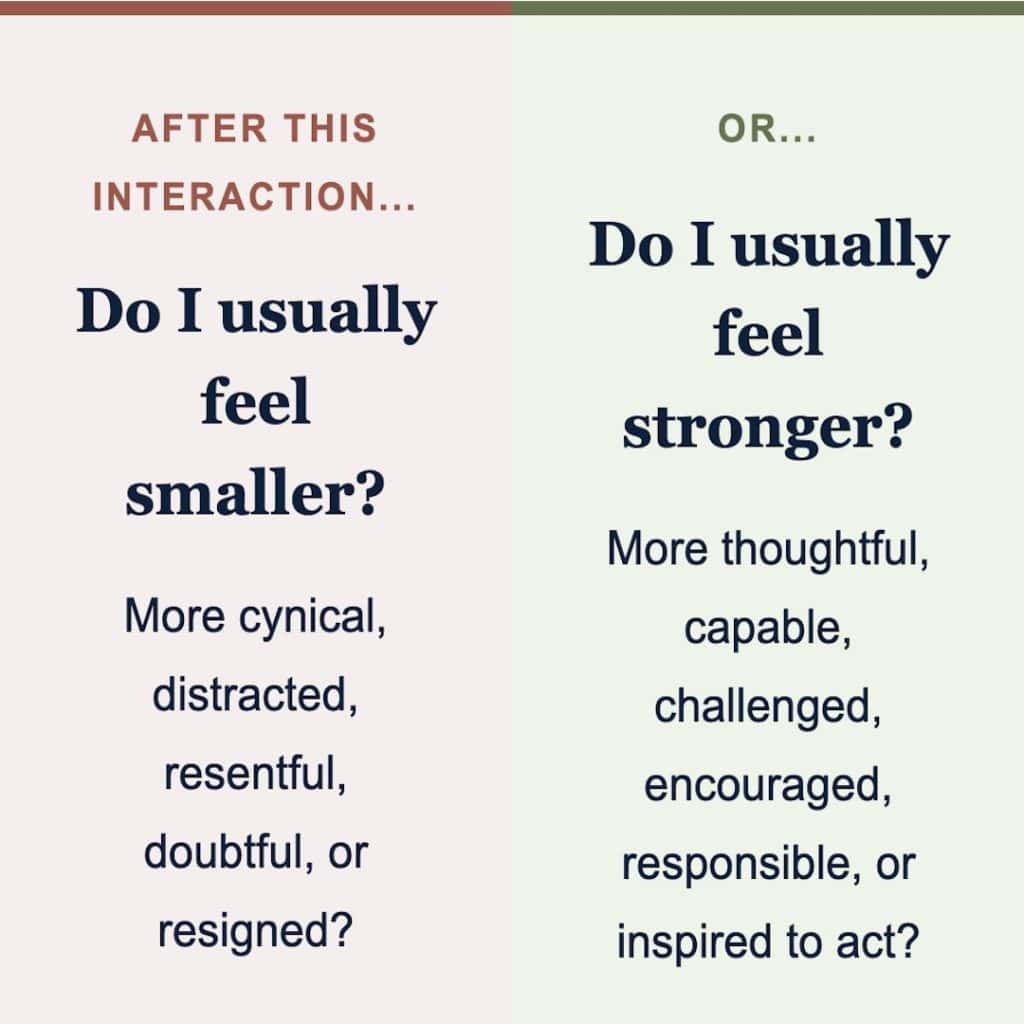
Most people understand that food affects the body. Fewer people examine information with the same care, even though repeated information influences attention, mood, expectations, and conversation.
An hour spent consuming outrage gives the mind different material than an hour spent learning a useful skill. Constant exposure to comparison creates different mental habits than regular exposure to thoughtful instruction, biography, constructive conversation, or specialized knowledge.
The question is not whether every piece of content is positive. Accurate thinking requires awareness of difficulty and reality. The question is whether your overall information environment makes you more capable of purposeful action—or merely more emotionally occupied.
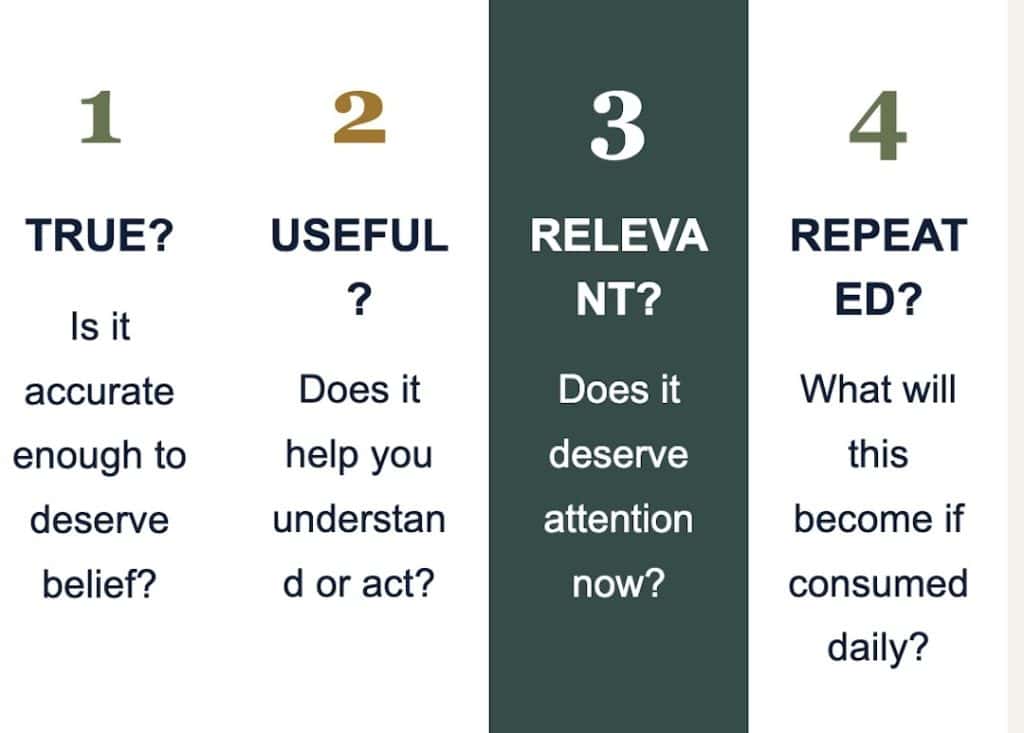
The Four-Part Input Filter
Before giving something repeated access to your attention, ask:
Design the Space Around the Behavior You Want
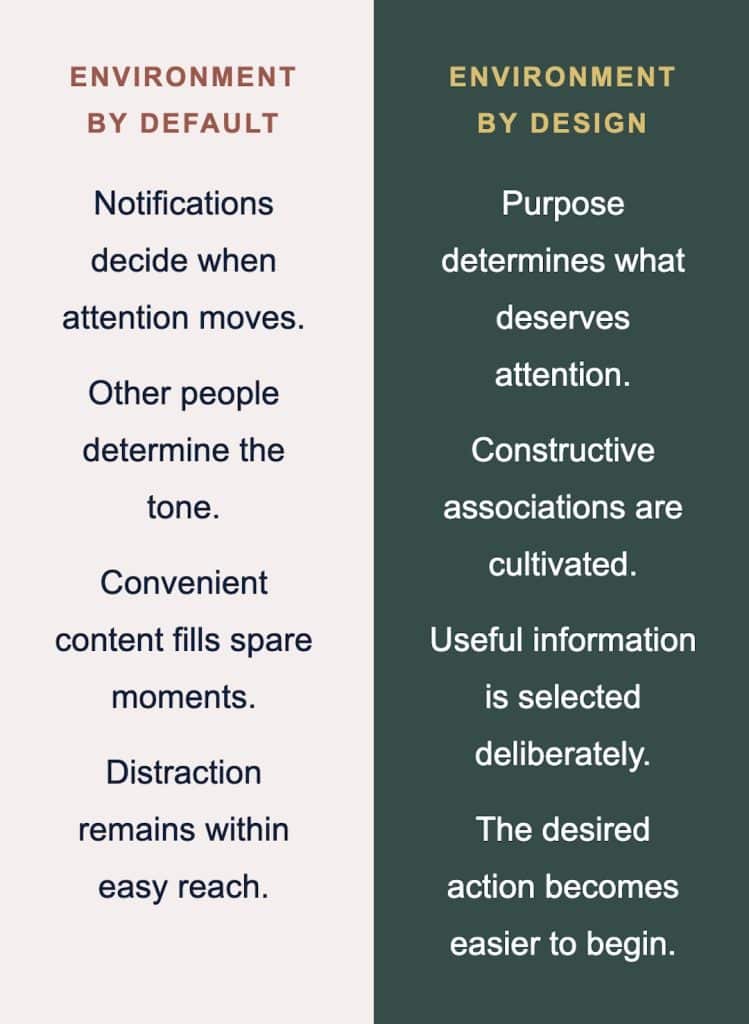
Willpower becomes less necessary when the environment supports the desired action. If you want to read more, make the book easier to reach than the distraction. If you want focused work, remove unnecessary alerts before the work begins. If you want to exercise, prepare the clothing and equipment in advance. If you want better meetings, create an environment in which preparation and attention are expected. Small environmental choices reduce the number of times discipline must fight the same avoidable battle
Build an Environment That Challenges You Upward
Hill’s Master Mind principle offers one of the clearest examples of intentionally designing a human environment. The purpose of a strong alliance is not merely companionship. It is to bring together people whose knowledge, experience, standards, imagination, and encouragement strengthen one another around a definite purpose.
You do not need an enormous network. A few constructive relationships can profoundly change the questions you ask, the opportunities you notice, and the standards you accept from yourself.
Do not merely ask whether your environment is comfortable. Ask whether it is helping you become the person your purpose requires.
Today’s Practice
Change One Input
Remove one influence that repeatedly weakens your attention and replace it with one that better supports the person you are trying to become.
Today, look beyond your intentions and examine the environment in which those intentions are expected to survive.
Consider the conversations you hear repeatedly. Look at the information entering your mind each day. Study the physical spaces in which you work, rest, think, and make decisions.
You may not be able to redesign every circumstance, but even small changes can alter what receives your attention and what behavior becomes easier.
Choose your environment where you can—because over time, your environment is helping choose who you become.

Napoleon Hill’s The Language of Thought: Leverage Your Thoughts to Achieve Your Desires
Napoleon Hill’s The Language of Thought is your guide to understanding, generating, and directing more powerful thoughts so that you can live and work with more intention, joy, and success.
The single most powerful tool available to human beings is not money, physical strength, influence, or a network; it is the mind. Our thoughts determine our outcomes in life, as well as our ability to enjoy the journey. In order to harness our thoughts to create material success, we do not require any personal advantage such as wealth, connections, or education. We simply need to utilize the mental resources already within our possession by cultivating a thorough understanding of the workings of the mind and the manner in which thoughts may be transformed into their physical counterparts.
In order to create positive change in our lives, we must learn to speak the language of thought, which has its own unique formula. This book contains Napoleon Hill’s best lessons on the components that make up the language of thought, as well as easy-to-follow, modernized instructions on how to leverage these elements to generate more powerful thoughts. In particular, you will discover how to:
- Magnetize your thought impulses with desire
- Refine your thoughts with definiteness of purpose
- Control and direct your emotions to productive ends
- Support your goals with a compelling network of motives
- Create positive thought habits through concentration and repetition
- Protect your mind from negative external influences
The more you practice the principles outlined in this book, the more fluency you will gain in the language of thought. As your facility for this language develops, you will experience greater control over your thoughts and emotions, which will enable you to enjoy more success in the pursuit of your definite major purpose. There are no limitations to the mind conditioned for achievement. Are you ready to write your success story with more powerful language?

One response to “Your Environment Is Shaping You”
Thank You Jojan