
Thought for the Day
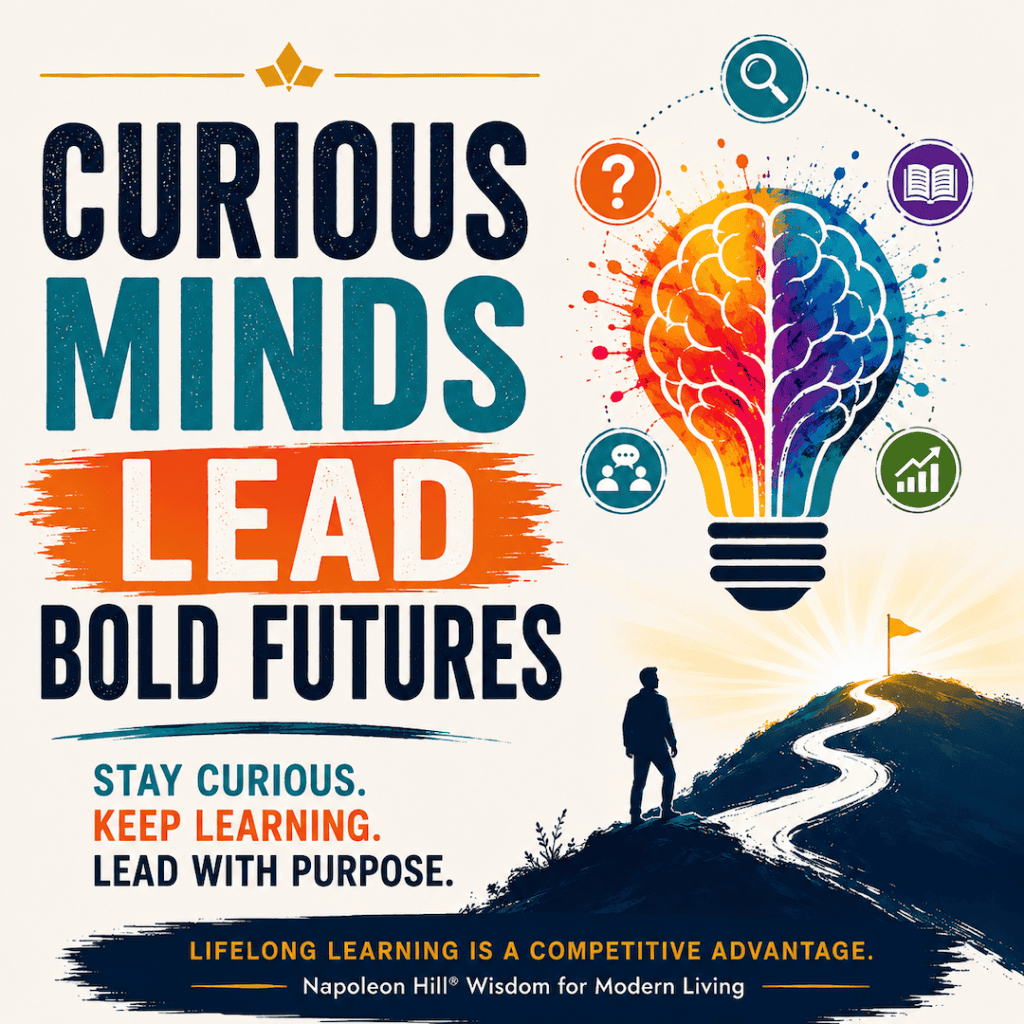
Thought for the Day
Why Curiosity Creates Leaders
Lifelong Learning as a Competitive Advantage
Leadership begins to weaken when certainty becomes more important than learning.
Better questions create better possibilities?
Knowledge may establish credibility, but curiosity keeps leadership relevant.
Leaders are often expected to have answers. Their teams look to them for direction, confidence, and sound judgment. Yet the pressure to appear knowledgeable can create a dangerous habit: speaking before listening, deciding before investigating, and defending an old answer when conditions have already changed.
Curiosity offers a stronger form of confidence. It allows a leader to say, “I do not yet understand this fully, but I am willing to ask, study, listen, and learn.”
That willingness is not weakness. It is the mental flexibility required to recognize new opportunities, correct flawed assumptions, and make better decisions before circumstances force the lesson upon us.
A Leadership Question
What might become possible if you stopped trying to prove what you know and became more interested in discovering what you do not?
Curiosity Through the Lens of Napoleon Hill
Napoleon Hill® emphasized specialized knowledge, accurate thinking, imagination, organized planning, and cooperation through the Master Mind principle. None of these can develop fully in a mind that believes it has nothing left to learn.
Accurate thinking requires investigation. Specialized knowledge must be renewed as professions and circumstances change. Imagination grows when unfamiliar ideas are explored. A Master Mind alliance becomes valuable when each participant is willing to listen beyond personal experience.
Curiosity connects these principles. It keeps the mind open without making it directionless and keeps confidence strong without allowing it to become arrogance.
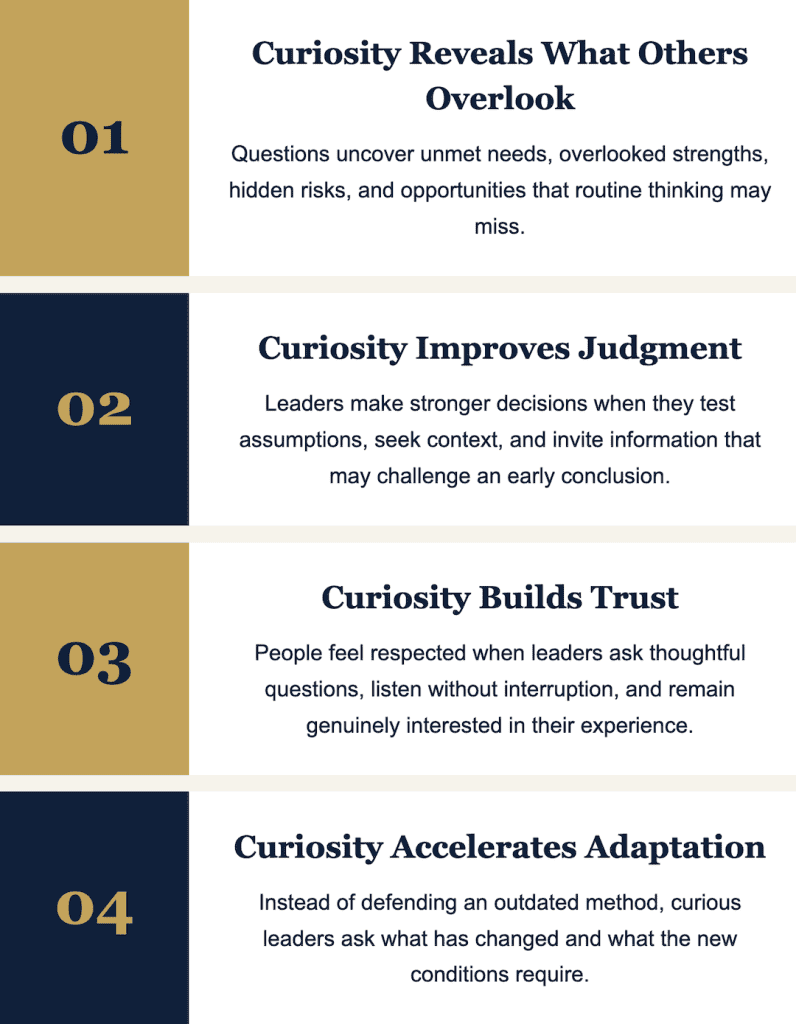
Four Ways Curiosity Strengthens Leadership
A curious leader sees more, learns faster, and adapts before stagnation becomes visible.
The Knowledge Trap
Experience is valuable, but experience can become limiting when past success is treated as proof that the old answer will always remain correct.
The more accomplished a person becomes, the easier it may be for others to stop challenging them. Teams begin waiting for the leader’s conclusion rather than contributing what they see. Eventually, the leader receives less truth precisely because their authority has grown.
Curiosity interrupts this pattern. It creates permission for others to contribute information, question assumptions, and improve the final result.
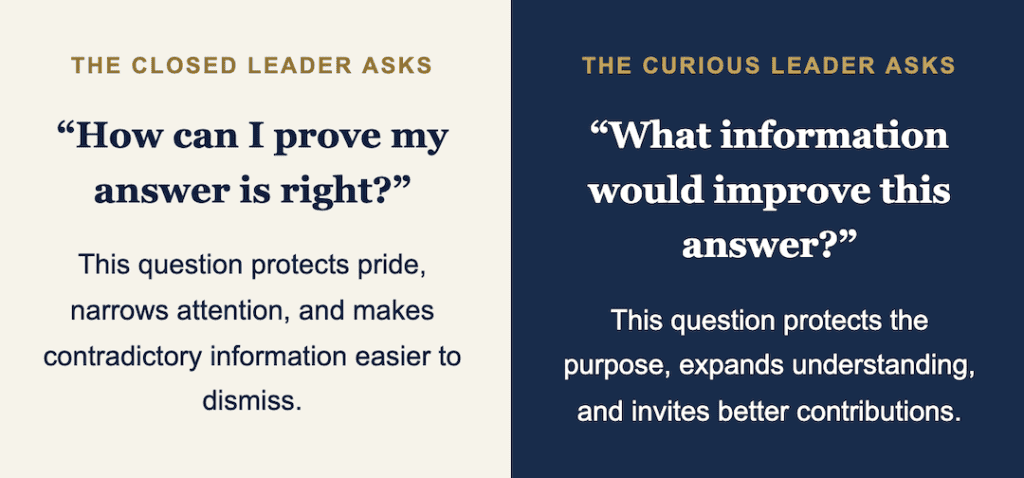
Curiosity Changes the Way Leaders Listen
Many people listen only long enough to prepare a response. Curious leaders listen to discover what they may not yet understand.
They ask follow-up questions. They notice when an answer is incomplete. They explore disagreement before treating it as disloyalty. They seek the perspective of people whose responsibilities allow them to see problems the leader may never encounter directly.
This does not mean surrendering authority. It means gathering better material before using authority to decide.
Lifelong Learning Is a Competitive Advantage
Skills, technology, markets, expectations, and methods continue to change. A position of authority cannot protect a leader whose knowledge stops developing.
The advantage belongs to the person who learns faster, applies lessons sooner, and remains willing to update a strategy when better information appears.
Learning compounds. One new insight improves a decision. That decision creates a better result. The result produces new information, stronger judgment, and greater capacity for the next challenge.
The leader who remains curious is never limited to the wisdom they possessed yesterday.
Today, notice where certainty may be preventing discovery. You may already possess valuable experience, but experience becomes more powerful when it remains open to new information.
Ask one question that moves beyond appearances. Listen long enough to hear something unexpected. Study one idea outside your familiar routine. Invite someone to show you what their position allows them to see.
Leadership is not diminished by the admission that learning remains necessary. Leadership is strengthened by the discipline to keep learning before the world exposes what has been neglected.

Napoleon Hill’s Guide to Achieving Your Goals
The Four Proven Principles of Success
From the author of the timeless classic Think and Grow Rich comes this transformative guide that unveils four key principles of success, with practical steps on how to achieve your dreams. Benefit from the enduring insights of one of the most influential self-help authors, Napoleon Hill. His philosophies have empowered countless individuals to take control of their lives and turn dreams into reality.
In Napoleon Hill’s Guide to Achieving Your Goals discover the four cornerstone principles for success that Hill has identified through decades of research. Learn how to incorporate these principles into your own life to unlock your full potential.
Even decades after its conception, Hill’s wisdom stands true and continues to offer value in our contemporary world. It’s a testament to the timeless relevance of Hill’s work. Reading this book will not only provide guidance and strategies for success but also ignite the motivation you need to get started and keep going. The inspiring words of Hill can push you to never give up on your dreams, regardless of the challenges you face.
