
Thought for the Day
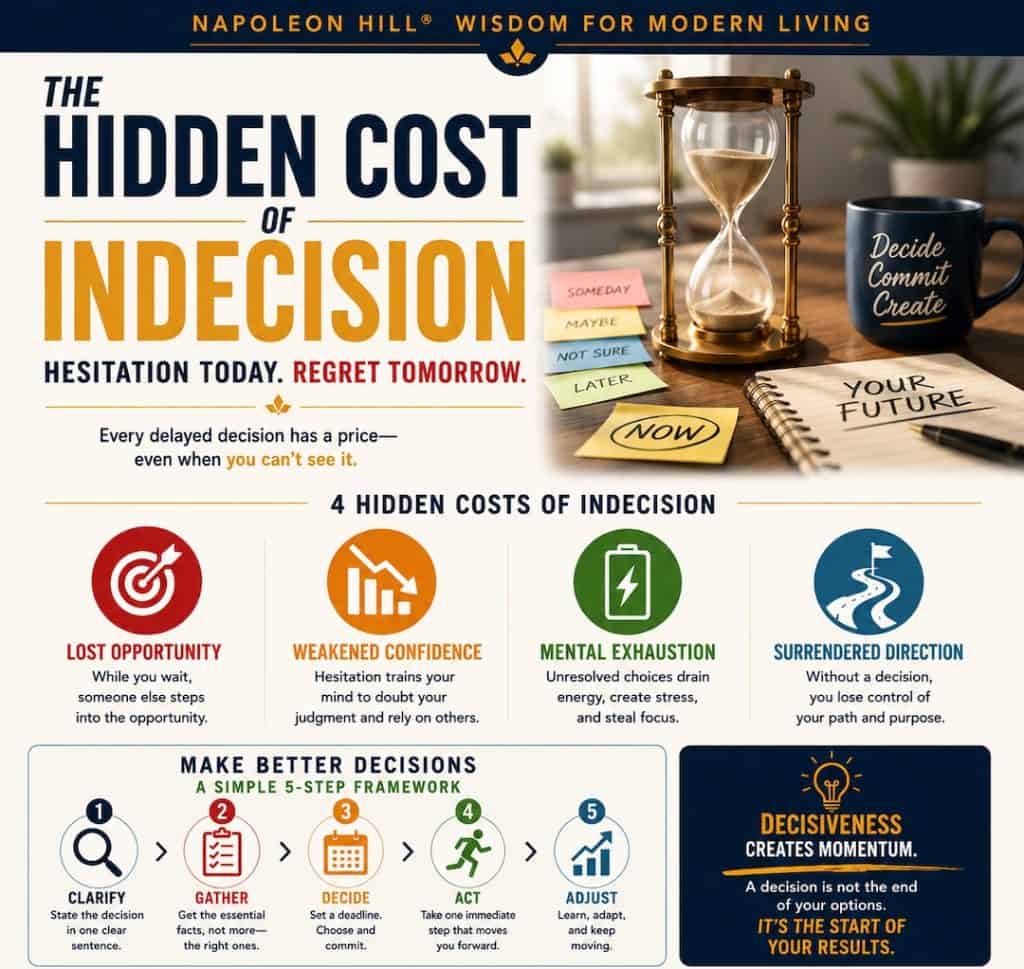
The Hidden Cost of Indecision
What Hesitation Quietly Takes from Your Future
Indecision rarely announces itself as failure. More often, it appears as waiting, overthinking, postponing, and preparing long after enough information exists to act.
Every delayed decision carries a cost—even when that cost is difficult to see
Important decisions naturally deserve thought. A responsible person gathers facts, considers consequences, seeks wise counsel, and avoids unnecessary risk.
But careful thinking can become a hiding place. We continue researching after the useful information has already been gathered. We ask for more opinions because no answer removes every uncertainty. We delay action until the opportunity, enthusiasm, or need for the decision has passed.
Indecision feels safer than making the wrong choice, yet remaining undecided is also a choice. It allows time, circumstances, and other people to determine the result.
Indecision does not preserve every option.
While we hesitate, conditions change. Opportunities expire, confidence weakens, momentum disappears, and choices that were once available may quietly close.
Decision as a Success Habit
Napoleon Hill® identified decision as one of the essential qualities behind achievement. He observed that successful people tend to reach decisions deliberately and avoid changing them without sound reason.
This does not mean acting impulsively. It means refusing to remain indefinitely suspended between intention and action. Once the relevant facts have been examined, a person must be willing to choose a direction and accept responsibility for the next step.
Decision converts desire into commitment. Without it, a definite purpose remains an attractive possibility rather than an organized course of action
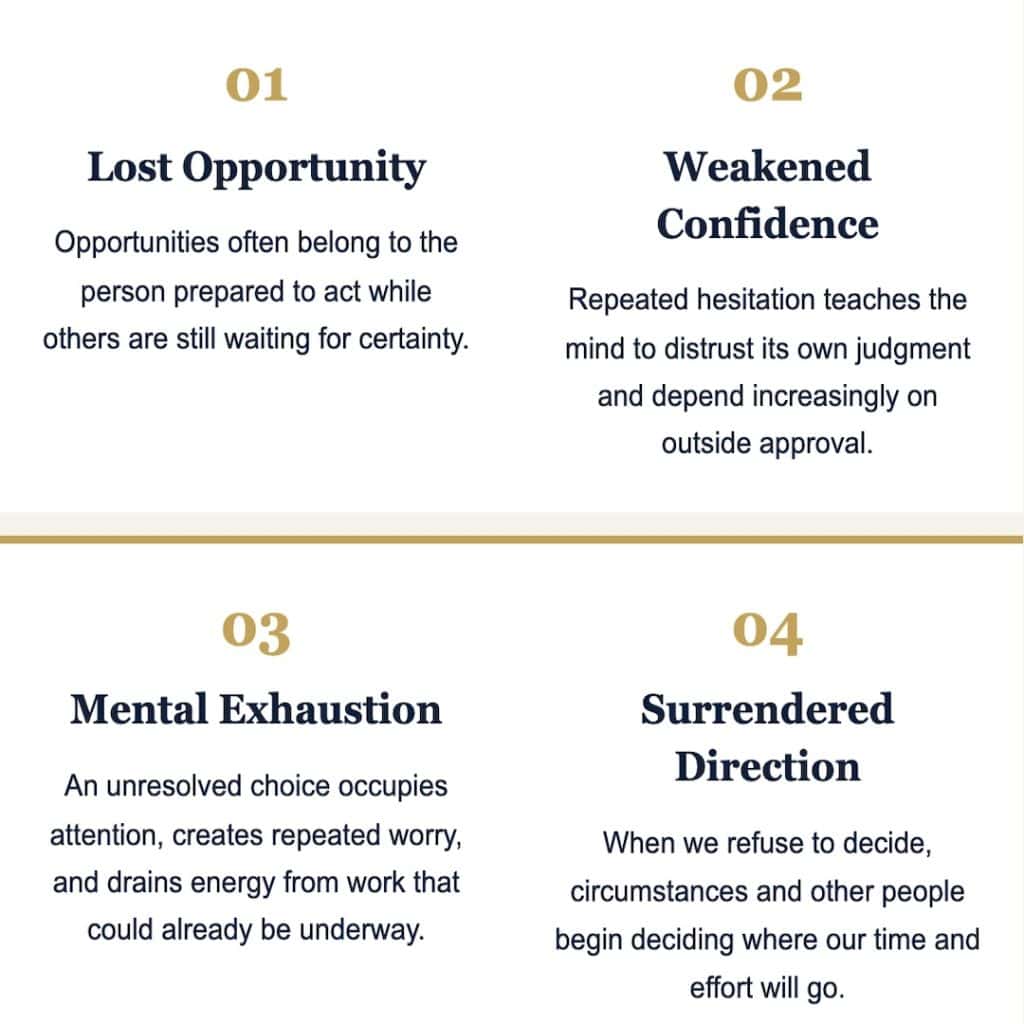
Four Hidden Costs of Indecision
Delay affects more than the choice itself.
Why Intelligent People Still Delay Decisions
Indecision is not always caused by laziness or lack of ability. It may grow from perfectionism, fear of criticism, fear of regret, too many options, or the belief that a correct choice should feel completely comfortable.
Some decisions also become difficult because they require us to disappoint someone, release an outdated identity, accept a new responsibility, or admit that the current direction is no longer working.
The mind may call this caution, but caution becomes costly when it repeatedly protects us from growth, truth, and necessary action.
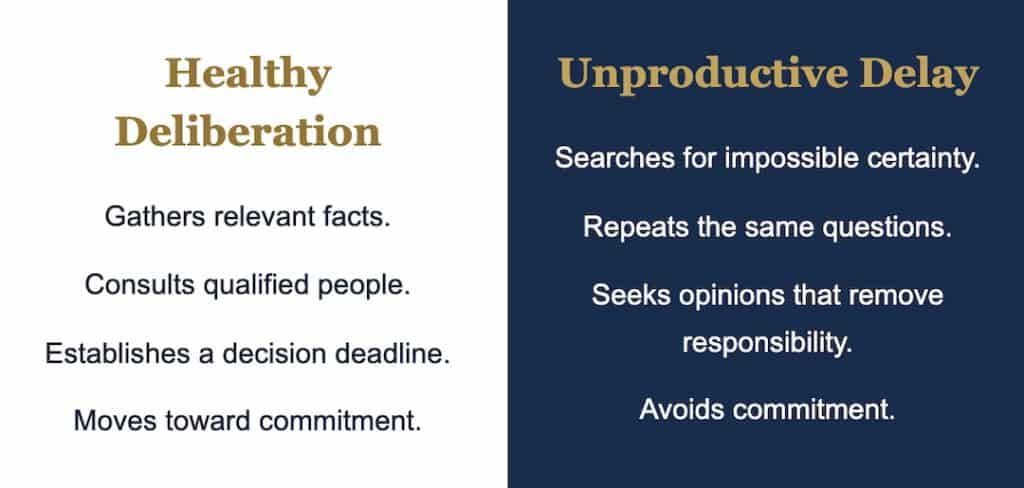
Deliberation or Delay?
One leads toward a decision. The other protects us from making one.
Make the Next Decision Smaller
A decision can feel overwhelming when it is treated as a permanent verdict on the entire future. Many choices become easier when reduced to the next responsible commitment.
You may not need to know whether a new direction will succeed for the next ten years. You may need to decide whether it deserves a carefully planned ninety-day test.
Action produces information that thought alone cannot provide. A decision creates results, and results create material for a wiser future decision.
A thoughtful decision may not guarantee the perfect outcome, but continued indecision guarantees that progress cannot begin
Today, identify one unresolved decision that has occupied more mental space than it deserves. Ask whether further delay is producing useful information—or merely protecting you from responsibility.
Gather the facts that matter. Seek counsel from people qualified to advise you. Establish a deadline. Then decide.
The decision may not remove every uncertainty, but it will restore direction. Once direction is restored, action, learning, confidence, and opportunity can begin moving again.

Think and Grow Rich
This edition of Napoleon Hill’s Classic Think and Grow Rich is a reproduction of Napoleon Hill’s personal copy of the first edition, the ONLY original version recommended by The Napoleon Hill Foundation, originally printed in March of 1937.
The most famous of all teachers of success spent a fortune and the better part of a lifetime of effort to produce the Law of Success philosophy that forms the basis of his books and that is so powerfully summarized and explained for the general public in this book.
In Think and Grow Rich, Hill draws on stories of Andrew Carnegie, Thomas Edison, Henry Ford, and other millionaires of his generation to illustrate his principles. This book will teach you the secrets that could bring you a fortune. It will show you not only what to do but how to do it. Once you learn and apply the simple, basic techniques revealed here, you will have mastered the secret of true and lasting success.
Money and material things are essential for freedom of body and mind, but there are some who will feel that the greatest of all riches can be evaluated only in terms of lasting friendships, loving family relationships, understanding between business associates, and introspective harmony which brings one true peace of mind! All who read, understand, and apply this philosophy will be better prepared to attract and enjoy these spiritual values.
BE PREPARED! When you expose yourself to the influence of this philosophy, you may experience a CHANGED LIFE which can help you negotiate your way through life with harmony and understanding and prepare you for the accumulation of abundant material riches.
