
Thought for the Day
Turning Criticism into Fuel
Using Feedback as a Catalyst for Growth
Criticism can either weaken confidence or reveal the next opportunity for improvement. The difference often lies in how we receive, examine, and use it.
.
Feedback becomes valuable when we stop treating every correction as a verdict on our worth.
Few experiences test emotional self-control as quickly as criticism. Even a thoughtful suggestion can feel personal when it touches work we care about, a decision we believed was correct, or an ability we have worked hard to develop.
Our first impulse may be to defend, explain, withdraw, or dismiss the person offering the feedback. That reaction is understandable. Criticism can awaken insecurity, pride, embarrassment, or the fear that one mistake will define how others see us.
Yet criticism does not automatically become harmful simply because it is uncomfortable. Sometimes discomfort is the mind’s signal that an important weakness, blind spot, or unrealized potential has been exposed.
You do not have to accept every criticism—but you can learn to examine every criticism without surrendering your confidence.
The Napoleon Hill Perspective
Napoleon Hill® emphasized accurate thinking, self-discipline, persistence, personal initiative, and the ability to learn from temporary defeat. Each principle requires a person to examine results honestly rather than protect an ineffective method.
A definite purpose gives criticism a useful context. Instead of asking only, “Did this comment hurt?” we can ask, “Does this information help me move closer to the person, performance, or result I intend to create?”
The goal is neither defensiveness nor passive agreement. It is accurate evaluation. Useful feedback should improve the plan. Unfair criticism should strengthen discernment without controlling the mind.
Criticism in a Highly Visible World
Today, feedback can arrive from managers, customers, colleagues, audiences, online comments, performance data, and people who know very little about the circumstances surrounding the work.
Because criticism is more visible and immediate, it can feel larger than it deserves. One negative comment may overshadow dozens of positive responses. A single mistake can appear more important than months of responsible work.
Emotional discipline helps us restore proportion. Not every critic is qualified. Not every opinion is accurate. Not every harsh statement deserves a response. But even poorly delivered criticism may contain a fact worth considering.
Filter the Feedback
Before reacting, determine what kind of criticism you have received.
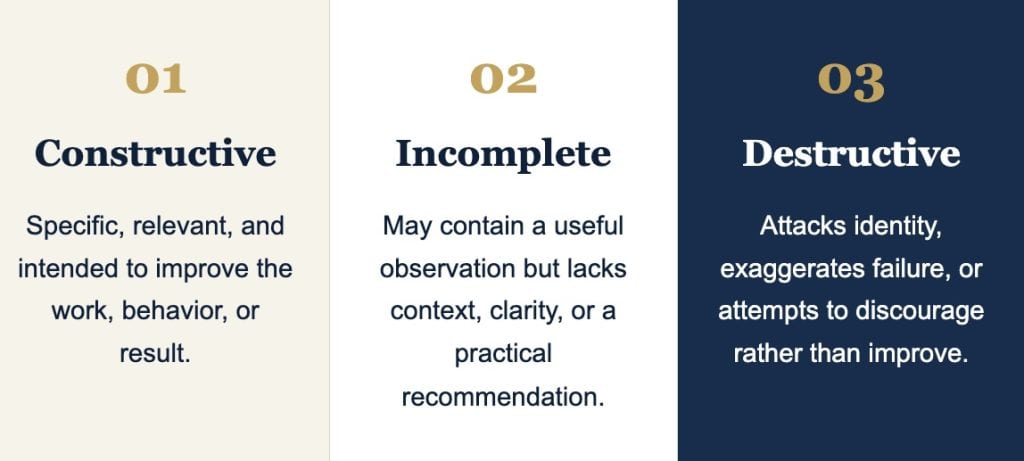
Separate the Message from the Delivery
Helpful information is not always communicated skillfully. A person may identify a real problem while expressing it with impatience, poor timing, or unnecessary sharpness.
Emotional self-control allows us to separate two questions: Was the delivery appropriate? Is any part of the message accurate?
We can reject disrespect without rejecting useful information. We can also acknowledge a valid concern without agreeing with every conclusion attached to it.
Turn Feedback into Forward Motion
Four deliberate responses can convert criticism into growth.

When Criticism Should Not Be Accepted
Growth does not require accepting every opinion as truth. Criticism may be distorted by rivalry, resentment, prejudice, incomplete information, or standards that conflict with your purpose and values.
Consider the source. Does the person possess relevant knowledge? Have they demonstrated sound judgment? Are they invested in a better result, or merely in making you feel smaller?
Discernment means extracting what is useful, correcting what is true, and releasing what does not deserve continued space in the mind.
Criticism becomes fuel when it is converted into clearer thinking, stronger preparation, and a better next attempt.
Today, resist the urge to let criticism decide what you believe about yourself. One correction does not erase your strengths. One mistake does not cancel your progress. One person’s opinion does not define your potential.
Listen without surrendering your judgment. Examine the facts without defending every imperfection. Take what helps you improve, release what is unfair, and direct your attention toward the next constructive action.
The strongest response to criticism is not argument, withdrawal, or discouragement. It is visible growth.

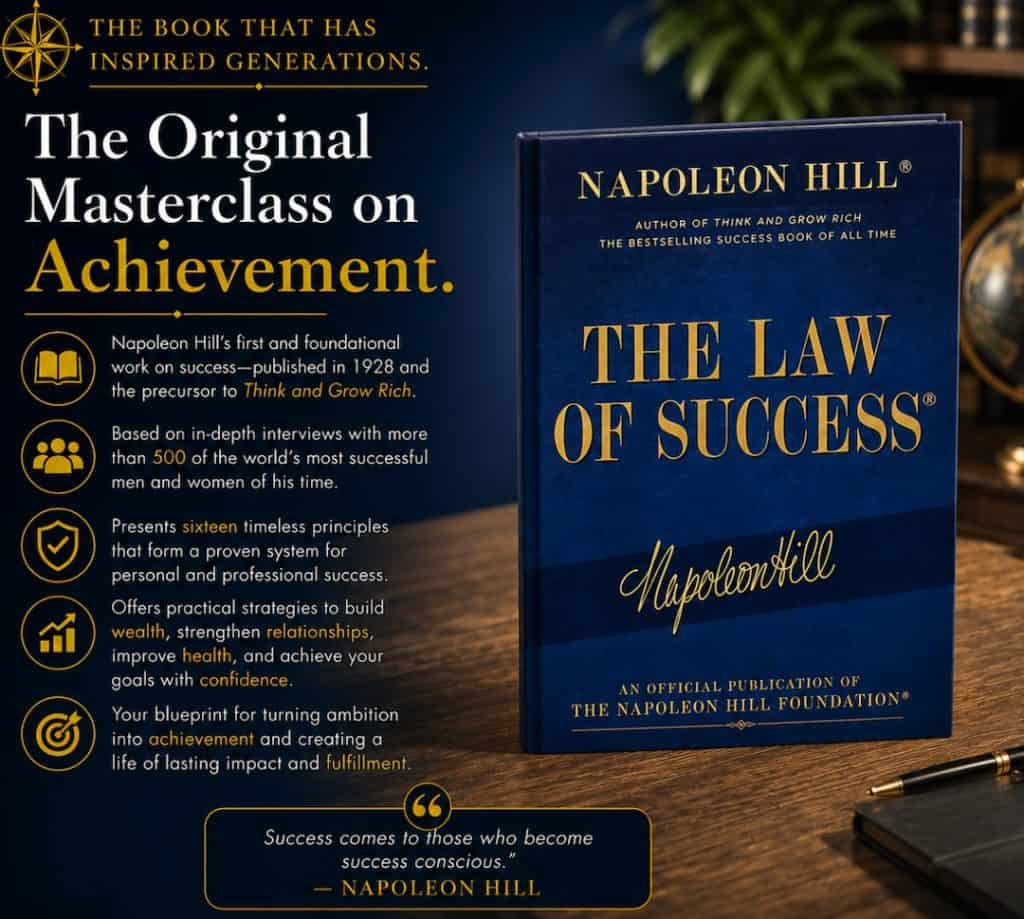
The Law of Success: Napoleon Hill’s
Writings on Personal Achievement, Wealth
and Lasting Success
Before the landmark book Think and Grow Rich came The Law of Success, an eight-volume series in which Hill presents the complete Science of Success philosophy. Originally published in 1928, this success system contains sixteen lessons on personal achievement, gleaned from interviews with and research on over 500 top performers from various industries and walks of life. Now condensed for your convenience into one compact volume curated by the Trustees of the Napoleon Hill Foundation, The Law of Success details the exact steps by which any individual can harness the power of thought to turn their dreams into reality. This is much more than a guide or roadmap; it is a total lifestyle makeover, with concrete resources for everyday application. If you are serious about becoming the best version of yourself in your field, your relationships, your health, and your finances, then you are ready for the original master class on success.
